


Chemicals, industrial waste contamination turn six Bangladesh rivers untreatable
Inefficient sewage management, dysfunctional water treatment mechanisms primary causes of water pollution, say experts
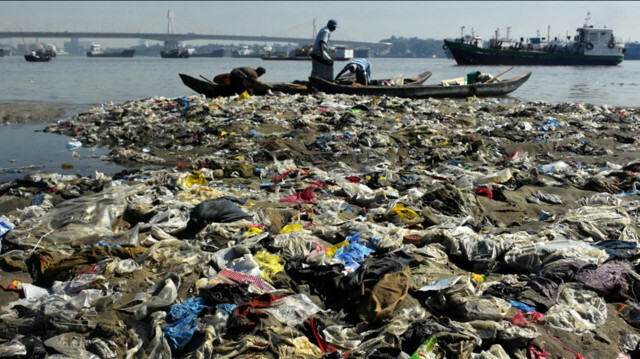
The six main rivers surrounding the Bangladeshi capital of Dhaka, which have been considered lifelines of the megacity, are being polluted at an alarming level by industrial and other wastes, experts and officials said on the International Day of Action for Rivers which is observed every year on March 14.
Factories dealing with medicines, readymade garments, dyeing, cement and other products have been discharging waste into the Buriganga, Shitalakshya, Turag, Dhaleshwari and Balu rivers in an unbridled manner for many years without any effective measures to curb it.
According to official records of the Bangladesh Inland Water Transport Authority (BIWTA), around 350,000 kilograms (350 metric tons) of toxic waste is dumped into rivers every day from about 7,000 industries and other residential areas in greater Dhaka and adjacent areas.
Advertisement
A study jointly conducted by the University at Buffalo (UB) and icddr,b, a leading global health research institute based in Bangladesh, published in December 2019 noted that Dhaka’s rivers are heavily contaminated with medicines, pesticides and other chemicals.
Ainun Nishat, a professor at BRAC University in Dhaka and well-known water resource management and climate change expert, told Anadolu Agency that Dhaka is the "uncivilized capital" of an "uncivilized state" with no separate sewage line.
“Most of the areas of Dhaka have only one water line that is used to drain out domestic waste, industrial garbage, rainwater and everything to rivers,” Nishat said.
Referring to the common wastewater treatment process of the rest of the world, he added that most urban areas in the world maintain two pipelines -- one to discharge rainwater and another to drain wastes.
“Currently, we have only 10% of wastewater treatment capacity at the Pagla Sewage Treatment Plant, which is also the only sewage treatment plant in the capital Dhaka,” he said, adding there is no quick solution to this.
Advertisement
Most of the industries have effluent treatment plants (ETPs), but the authorities don’t run those.
“Only during inspections, they run those for a limited time. Dyeing, chemical and almost all other industries are practicing the same fraudulence,” he said.
- Concerns over worst consequences
Mohammad Shamim, a resident of Dhaka’s low-lying area of Hazaribagh, told Anadolu Agency that the color of Dhaka's main river Buriganga is completely black.
“There is a heavy and almost unbearably bad smell from the river water, and it is not only seen in the case of the Buriganga, but the condition of waters of other rivers is almost the same,” Shamim added.
Nuru Mia, who has a small boat to carry people and goods on the Buriganga River and has been doing this for nearly two decades, told Anadolu Agency there was no difference between the water of Buriganga and sewage drains.
“While navigating my boat across the side of the river, I see hundreds of drains joining the river and discharging waste continuously,” Mia said.
The World Bank has identified the Buriganga River as one of the world’s 10 most polluted rivers which contains heavy metals like chromium, iron and zinc, while the condition of the other four rivers is nearly the same.
Underlining the long-term effects of the pollution, UB and icddr,b’s joint study also warned that “this kind of pollution is a problem because it can contribute to the development of bacteria and fungi that are resistant to the medicines we have for treating human infections.”
- Tannery industry
The tannery industry, which was relocated by a government order from the capital Dhaka to the city of Savar, is now polluting another major river, Dhaleshwari, endangering the existence of biodiversity as the factory owners are reluctant to use pollution control methods or common effluent treatment plants.
Advertisement
Untreated liquid and solid wastes full of high levels of concentrated chromium and salt from the leather factories have degraded the area’s water and soil quality.
Agricultural cultivation is being dangerously affected while food production has been halved along with the changing soil color in the area. The water is so polluted that hardly any fish or other aquatic animals can survive in it.
Md Mofizul Islam moved to Dhaka from northern Rangpur district nearly one and half decades ago in search of employment. He managed to secure a job at a garment factory.
His wife and elder son have also joined him at the same factory in Savar, near the tannery industry. With their meager savings, they bought a small piece of land near the Dhaleshwari River about a decade back, he told Anadolu Agency.
“I am shocked to see the gradual change in (the river’s) color to dark following the establishment of the Savar Tannery Industrial Estate. My piece of land is left unused as the soil near the area is hardly fertile for agricultural cultivation,” he said.
He added that the river seems dead, as they haven’t found any fish there, even though it was once rich with various species.
Speaking to Anadolu Agency, Mohammad Azaz, chairman of the River and Delta Research Centre, a center for experts in the fields of river basin management, sustainability and delta studies, said the tannery industry, which earlier destroyed Dhaka's main Buriganga River, is now polluting the Dhaleshwari and its biodiversity.
He said the industry was transferred to Savar without completing the required regulations. The Savar Tannery Industrial Estate's central effluent treatment plant (CETP) has basic faults and has yet to completely function even after 10 years of relocation.
"The dysfunctional CETP has caused the industry’s internal waste to mix with the river water without any treatment,'' he said, adding that “five fishermen colonies fully dependent on the river got unemployed and forced to change their profession.”
Advertisement
The Savar Tannery Industrial Estate is producing huge pollution in the area, putting agriculture and public health at high risk, Azaz said.
Nishat, however, said that as the Bangladeshi government has a huge amount of funds now and has declared a master plan for Dhaka, it is expected that something better will happen.
"But proper planning and its due implementation are a must."
Comments you share on our site are a valuable resource for other users. Please be respectful of different opinions and other users. Avoid using rude, aggressive, derogatory, or discriminatory language.