


Is Trump softening his stance against China?

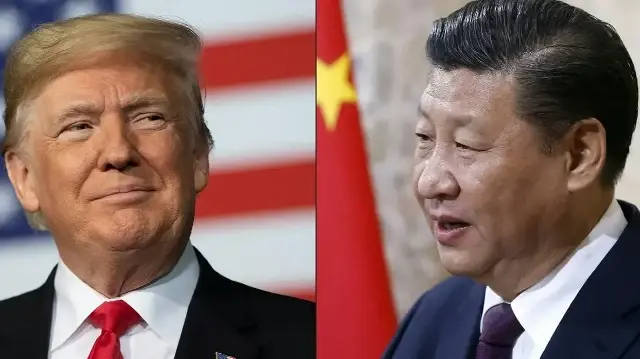
In President Trump’s “National Security Strategy” document, relatively softer language toward China, alongside references to stabilizing relations between the United States and Russia, is being debated. One of the questions raised was: “Is Trump stepping back from a hawkish approach toward China?” Yet American foreign policy elites—including the “prioritizers” who advocate reducing U.S. military commitments in Europe and the Middle East to focus on the Asia-Pacific—are largely in agreement that China constitutes an “existential threat” to the United States. The disagreement lies not in the diagnosis, but in the answers.
Advertisement
Elbridge Colby is one of the most prominent advocates of “prioritization” within Trump’s Department of War. Colby, who is responsible for drafting the Trump administration’s “National Defense Strategy,” is known for his hawkish and “urgentist” views on China. A question is also being asked about him: “Has Colby softened his urgentist approach?” Describing himself as a “realist,” Colby is the author of a book that addresses “China prioritization” within the framework of “Grand Strategy.”
Advertisement
According to Colby, alongside small holes in the American boat, there is one big hole. That big hole is China. Colby has argued that the American boat can stay afloat despite small holes, but unless the large and steadily expanding hole is urgently sealed, it will sink the vessel.
Colby maintains that the United States should devote its limited time and limited resources to that big hole, arguing—contrary to Neoconservatives and liberal hawks—that the U.S. does not have the capacity to withstand multiple wars simultaneously. According to Colby, the United States is not even currently strong enough to defeat China. The U.S., he argues, should prepare for a single war it is confident it can win. A China that believes the U.S. is fully prepared for total war will refrain from invading Taiwan.
Advertisement
During Trump’s first term, Colby’s framing of China as the greatest power threat to America encountered resistance from many quarters, including U.S. Central Command (CENTCOM) and the Joint Chiefs of Staff. With the support of the Navy and, to a degree, the Air Force, Colby succeeded in having his “urgentist” China perspective included in the 2018 “National Defense Strategy” document.
Advertisement
Colby has taken the view that “if defeating China requires forming coalitions with anti-democratic regimes in the region, so be it.” According to Colby, ideology plays only a minimal role in U.S.-China competition. Even if China were a democracy under Western conditions, the situation would not change for the United States.
Advertisement
The inclusion of the “Monroe Doctrine” in Trump’s new “National Security Strategy” aims to block China’s access to resources in Latin America. Latin America is an attractive market for China, and China is an attractive market for Latin America. The “Trump-flavored Monroe Doctrine” seeks to radically and imperially reshape this landscape in favor of the United States. This is the idea behind Trump’s decision to rename the Department of Defense as the “Department of War.”
Advertisement
The approach toward Russia in the “National Security Strategy” can be seen as a reverse replay of President Richard Nixon and National Security Advisor Henry Kissinger’s policy of separating China from the Soviet Union. Nixon’s 1972 visit to Beijing to meet Mao laid the foundation for U.S.-China rapprochement. Thanks to this rapprochement, the People’s Republic of China under Mao broke out of its political and economic isolation and even took over China’s permanent seat on the UN Security Council from the Republic of China (Taiwan).
Advertisement
Now, the Trump administration, while treating China as a kind of “global equal” that could be described as a “G-2,” simultaneously seeks closer ties with Russia. The reality is that Americans do not want to see Russia as China’s ally. American “new realist strategists” accused the Biden administration of reinforcing Russia-China relations by pressuring Russia too hard. According to these strategists, Biden’s Russia policy strengthened China, the United States’ number one rival.
Advertisement
Analyses suggest that Trump’s policy of stabilizing U.S.-Russia relations aims to pull Russia away from China. Russia and China, for their part, will likely avert their gaze from Trump’s “reverse Kissinger” maneuver for a while. China does not want an early military confrontation with the United States. Russia, meanwhile, is in urgent need of preserving its gains in Ukraine and escaping American sanctions. The United States, for its part, urgently needs to “regroup” domestically and in Latin America, and to elevate its military power—especially its Navy—to an unchallengeable level.
Advertisement
All three countries are playing for time in the “Great Power Competition.” From this perspective, the political interests of the United States, Russia, and China may align in the short term. What comes after, however, remains an open question.
Comments you share on our site are a valuable resource for other users. Please be respectful of different opinions and other users. Avoid using rude, aggressive, derogatory, or discriminatory language.