


Did Trump win the federal shutdown war?

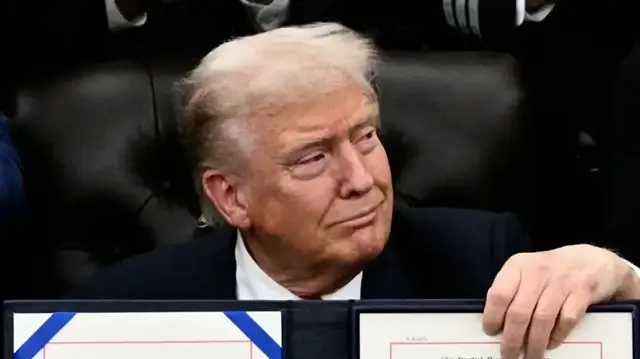
The 43-day shutdown, the longest federal government shutdown in American history, came to an end after seven Democratic senators and one independent joined Republicans in voting to reopen the government. The senators, who represent the centrist wing of the Democratic Party and none of whom face election concerns in 2026, showed that they believed party leader Schumer’s strategy wasn’t going to work. Schumer had calculated that the fallout from the gubernatorial election results and the chaos caused by the federal shutdown would eventually force Trump to negotiate, but when that didn’t happen, he failed to maintain discipline within his own party.
The agreement, which keeps the federal government open until the end of January and provides a year of funding for certain health-related programs, includes only a promise for a vote on extending health subsidies — Democrats’ most crucial demand. So by accepting this deal, Democrats gave up the reasons they had for initiating the shutdown, while Trump appears to have succeeded in his negotiation strategy by enforcing party discipline among Republicans. However, public opinion polls show that voters blame Republicans for the chaos caused by the shutdown and that Trump’s refusal to compromise has hurt his popularity.
WHY DID THE DEMOCRATS AGREE?
Virginia senator Tim Kaine, one of the senators who broke from the faction that wanted to hold out to the end and instead chose to strike a deal with Republicans, explained in an op-ed why he supported the agreement, citing the hardship faced by hundreds of thousands of federal workers and the chaos beginning to unfold at airports. Kaine, who said he personally took part in the negotiations, stated that he was convinced Republicans would never compromise on health subsidies and that Trump did not care about federal workers’ suffering. The difficulties faced by roughly 1.4 million federal employees who have not been paid for six weeks and were placed on mandatory leave, the millions of low-income households who lost access to food assistance, and the chaotic scenes at airports as Thanksgiving approached appear to have pushed these senators to say yes to a ‘pragmatic’ solution rather than continue a political standoff with Trump.
Advertisement
In March, ten senators defied party leader Schumer’s strategy, which would have led to a shutdown, and prevented it. In September, Schumer centered budget negotiations around health subsidies, the issue most likely to hold the party together, and accepted the risk of a federal shutdown. Trump’s accusations that Democrats wanted to provide free healthcare to ‘illegal’ immigrants and his efforts to prevent Republicans from negotiating triggered the shutdown. After the shutdown passed the one-month mark and it became clear that Republicans were taking the political hit, Trump began floating the ‘nuclear’ option. Calling on Republicans to lower the 60-vote threshold to a simple majority, Trump frightened centrist Democrats by raising concerns that such a move could make ‘authoritarian’ governance permanent, even though Republicans showed little enthusiasm for the idea.
SMALL CALCULATIONS AND WASHINGTON’S DYSFUNCTION
Trump’s apparent indifference to the hardships faced by federal employees under his own administration seems to have triggered divisions among Democrats. Those Democrats who wanted to take a principled stand against Trump and match Republicans’ uncompromising style believed they were finally implementing that strategy during the shutdown. The fact that the shutdown ended due to the initiative of the centrist Democrats showed that the entire party was not united around this approach. The progressive wing — which argues that the Democratic Party’s establishment, which failed against Trump, is politically ineffective — insisted that the party must now adopt more radical and reformist positions. The progressive left, which made waves with Zohrani’s strong showing in the gubernatorial races, also played a significant role in ensuring that Republicans were blamed for the political fallout of the shutdown.
At a moment when the progressive wing of the Democratic Party is on the rise politically, the principled stance it showed on the shutdown signaled that the party would likely come under greater influence from this wing in the coming period. But Schumer, who represents the party elite, failed to build consensus on a unified approach between the centrist faction that wanted an agreement with Republicans and the progressive faction. This showed that Democrats were left helpless when faced with Republicans uniting around Trump’s strategy. The agreement that funds the federal government only until the end of January suggests that a shutdown could resurface, but at that point public opinion will not be on the Democrats’ side. Governing the country under the constant threat of a shutdown — in a way reminiscent of the ‘Aç kapa Artema’ commercial — deepens the perception that the small political calculations of both parties are preventing solutions to public problems and that Washington is becoming increasingly dysfunctional.
It’s not possible to say that Trump won the shutdown war, because his popularity fell and he failed to convince Republicans to adopt the nuclear option. Public opinion polls indicate that both he and the Republicans are held responsible for the record-breaking shutdown because of their refusal to compromise. But it’s also fair to say Trump did not lose, as his refusal to negotiate and his success in persuading his party to stick to his strategy can be seen as an achievement. He failed at producing solutions but succeeded at enforcing an uncompromising stance within his party. This style of politics is neither new nor surprising, but it is highly likely that Republicans will pay the price for it in the November 2026 elections. It would be no surprise if the millions affected by the shutdown place the blame on Trump and the Republicans for the hardships they faced over the past six weeks.
Comments you share on our site are a valuable resource for other users. Please be respectful of different opinions and other users. Avoid using rude, aggressive, derogatory, or discriminatory language.