


Behind-the-scenes insights from the table and the field: Hamas will bury its weapons


Almost three weeks have passed. Türkiye, the United States, Egypt, and Qatar, as guarantor countries, signed the Middle East Peace Declaration on October 13 in the presence of world leaders. On that date, the second phase of the cease-fire and peace process in Gaza also began. However, it is clear that… the start of the second phase does not mean the first phase of the cease-fire plan has been completed. Both the cease-fire and peace in Gaza hang by a thread.
MİT Chief İbrahim Kalın played a highly effective role in achieving the cease-fire. Now that cease-fire needs to be maintained. Foreign Minister Hakan Fidan hosted in Istanbul the foreign ministers of Muslim countries who had attended Trump’s meeting in New York. The reason: the mission to protect the cease-fire. That means there are some problems brewing in the background. What’s happening on the ground and at the table? Let me explain…
THEY’RE SELLING GOODS TO GAZA UNDER THE GUISE OF HUMANITARIAN AID
The first phase of the cease-fire consisted of four points: One, the cease-fire itself; Two, the entry of humanitarian aid into Gaza; Three, the exchange of hostages; and Four, Israel’s withdrawal. Looking at what has happened since then, it’s clear these four points have not been fully achieved. Here are the issues under each heading:
One. Israel has repeatedly violated the cease-fire at various intervals. Since October 13, the number of people killed has exceeded 400. The provocations in the West Bank also continue.
Two. Six hundred trucks of humanitarian aid are supposed to enter Gaza each day. Are they? No. Yet Israel announced that 550 trucks enter Gaza daily. Is that true? Yes. But there’s a deception here. The reality is this: of the 550 trucks entering Gaza, only 145 carry humanitarian supplies, while the rest carry commercial goods. While humanitarian supplies are held up in Rafah, trucks carrying goods that companies will sell to Gazans for profit are being allowed in. What a disgrace.
Three. The hostage-exchange process is moving forward, but there’s a major problem. In Gaza, there isn’t a stone left standing. That makes it very difficult to locate the remains of some hostages. Israel is slowing down the process by preventing the entry of experienced teams with the heavy equipment needed for this task.
Four. Israel has withdrawn behind the yellow zone, but its efforts to expand the area it still holds have not gone unnoticed.
THOSE LOOKING AT THE ISSUE THROUGH A NARROW LENS…
It’s painful but true: Israel is not the only obstacle preventing rapid progress in Gaza’s peace process. The hardest part of the process is that regional actors insist on viewing the issue through a narrow, national-interest perspective.
For example: Egypt did not attend the meeting in Istanbul. The official reason given was preparations related to a museum opening in Cairo. Yet we know the real reason—Egypt didn’t want to attend because it didn’t want to lose the initiative.
For example: the issue of Hamas giving up its weapons. I’ll explain the details below, but the Gulf’s position (Saudi Arabia, Egypt, the UAE) can be summed up as follows: They say, “We won’t invest in Gaza unless Hamas disarms.” U.S. Vice President J.D. Vance put it this way: “When it comes to Hamas, I see impatience in Israel and some Gulf countries—they need to show flexibility throughout this process.”
For example: the debate over who will “govern” Palestine. The U.S. says the Palestinian Authority must undergo reform. By “reform,” they mean Mahmoud Abbas should go. But who will replace him? That’s where the fight begins. Saudi Arabia and Egypt want Abbas’s deputy, Hussein al-Sheikh, to take the post, while the UAE wants to see Mohammed Dahlan in that seat. The Saudi-Egyptian duo has already taken a step in this direction: Abbas announced that if he can no longer continue in office, Hussein al-Sheikh will assume the presidency.
WHAT’S IN THE SECOND PHASE?
The cease-fire process entered its second phase twenty days ago. So what does this phase involve? It can be summarized under four main headings.
One. The establishment of an administrative structure in Gaza composed of Palestinians. On October 14, Egypt’s Foreign Minister announced that a 15-member committee of Palestinian technocrats had been chosen to govern Gaza after the war.
Two. The creation of a police force in Gaza. Egypt is training some Palestinians for this purpose.
Three. The deployment of an International Stabilization Force.
Four. The disarmament of Hamas.
There has been progress on the first and second points. But there has been no progress on the third and fourth. Still, some developments are unfolding behind the scenes.
WHO WILL BE IN THE INTERNATIONAL STABILIZATION FORCE
The International Stabilization Force will be deployed in Gaza to maintain the cease-fire and coordinate humanitarian aid. A resolution will be passed at the UN Security Council to authorize this force. Ankara is working to ensure that no status quo unfavorable to Palestine emerges later. Türkiye has informed its counterparts that it could support the international force. On this matter, Egypt, the U.S., and other countries want Türkiye to take part in the Gaza mission. Even Israel’s security and intelligence circles reportedly agree, though Netanyahu opposes it for domestic political reasons. The U.S. wants to work closely with Türkiye in Gaza, but because of the Netanyahu factor, it hasn’t thrown its full weight behind this. As I’ve written before: Türkiye wants to be in Gaza—militarily or civically. But it doesn’t want the cease-fire to collapse as a result.
HAMAS WON’T GIVE UP ITS WEAPONS
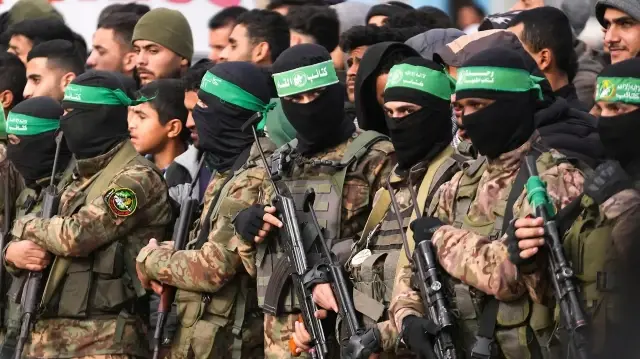
So what about the issue of Hamas disarmament? The temporary administration composed of Palestinians will be the sole authority authorized to carry weapons in Gaza. Anyone else carrying weapons will have them confiscated. Hamas supports the establishment of an independent Palestinian authority in Gaza, but it doesn’t want to surrender its weapons until a Palestinian state is established based on a two-state solution. It simply doesn’t trust Israel.
So what will happen? Hamas will not hand over its weapons to the Palestinian administration in Gaza. But since that administration will be the sole authority, Hamas will no longer carry weapons. In that case, we can say the weapons will be buried. Hamas will turn over its weapons to the Palestinian state once that state is established—if everything goes according to plan.
Comments you share on our site are a valuable resource for other users. Please be respectful of different opinions and other users. Avoid using rude, aggressive, derogatory, or discriminatory language.