


The alliances formed to dismantle the Muslim Brotherhood...

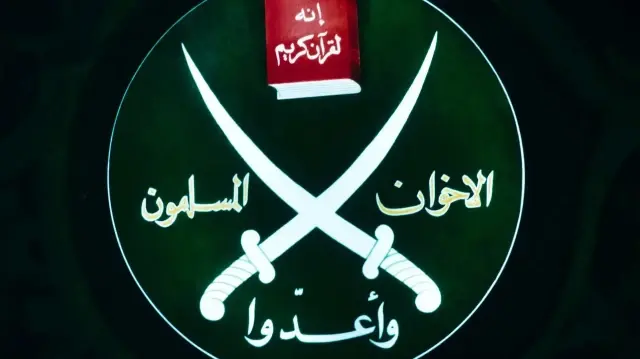
Last month, U.S. President Donald Trump signed a decision that initiates a process to designate the Muslim Brotherhood branches in Egypt, Jordan, and Lebanon as terrorist organizations. Although this decision differs from the November 18 move by Texas Governor Greg Abbott to label the Brotherhood a terrorist organization, it shows that a long-standing tension in U.S. policy toward the Brotherhood has reached an important decision-making stage.
What distinguishes Trump’s decision is that it merely instructs Secretary of State Marco Rubio and Treasury Secretary Scott Bessent to submit a report on whether the Muslim Brotherhood’s branches in countries such as Lebanon, Egypt, and Jordan should, for now, be designated as terrorist organizations. According to a White House briefing note, the executive order also directs the two ministers to proceed with designation measures within 45 days following the submission of the report.
The justifications cited for this decision accuse the Muslim Brotherhood in these countries of supporting or encouraging acts of violence against Israel and U.S. partners in the region, or of providing financial support to Hamas.
Meanwhile, the tension surrounding U.S. policy on the Brotherhood stems from the pressure the U.S. administration faces in international relations, despite its own objective criteria. Those objective criteria indicate that the Muslim Brotherhood has no armed activity anywhere in the world. However, some countries with which the U.S. maintains relations are demanding that Washington recognize the Brotherhood as a terrorist organization.
In fact, the Brotherhood also has no armed activity in these countries. In most cases, the real problem is the absence of democracy and the attempt to suppress opposition movements entirely through repressive methods. Despite this, the Brotherhood is still seen in all of these countries as the largest potential opposition movement. That regimes completely unaccustomed to opposition are seeking such an international alliance against a movement they have already suffocated domestically means nothing other than paranoia. It does not take much experience with history to see that such paranoia eventually brings about its own downfall.
It is impossible not to see that by responding positively to these demands, the U.S. would merely become an instrument of this paranoia. In fact, one of the issues that has made the U.S. hesitant until now—or rather turned these demands into a policy tension—is that the Brotherhood’s presence is not limited to just two or three countries. Today, the Brotherhood is a major international civil and political force, active under different names in many countries. While in some countries it is a potential opposition movement, in others it is a partner in government.
Labeling the Brotherhood a terrorist organization could directly entrench perceptions that equate Islam with terrorism, because the Brotherhood represents one of Islam’s most moderate, peaceful, and democratic faces. There is no example of the Brotherhood coming to power through coups or armed revolutions in Islamic countries. On the contrary, whenever it is given a chance through democratic processes, it emerges as the leading contender for power across the Islamic world. This was clearly seen during the Arab Spring. In the first elections held during post-uprising transition periods, Brotherhood-affiliated parties won in all of these countries.
In fact, this was precisely why the Arab Spring processes were disrupted in many places by bloody coups and even civil wars. Under these circumstances, the Brotherhood has been not the perpetrator of terrorist activities, military coups, or human rights violations, but rather their victim. Having already shattered their own moral criteria by continuing to support genocidal Israel, the U.S. and Europe will further lose credibility among Muslim populations because of their stance against the Brotherhood.
There has been heavy pressure on the U.S. from Gulf countries and Israel to classify the Brotherhood as a terrorist organization. After October 7, Israel—long accustomed to accusing others of terrorism, genocide, and antisemitism—lost enormous prestige worldwide. Israel has now come to be seen as a genocidal, primitive, murderous, and fanatical entity. Any accusation Israel directs at a country or movement from this point forward carries no weight or credibility whatsoever. It is no secret that the Brotherhood is Israel’s greatest enemy, as Israel itself is an extremely dangerous terrorist organization that has created Islamist-looking terror groups and unleashed them on Muslims to serve its own aims. Still, it would be wrong to assume that Trump signed this decision solely under Israeli pressure. Rather, Trump’s new Middle East alliance framework, combined with demands from Egypt and Gulf states, appears to have pushed him toward this hesitant step.
At the same time, this move should serve as a separate warning for those who claim that the Brotherhood is finished. The Brotherhood is still regarded as the greatest threat in all the countries where it is said to have ended. In these countries’ security perceptions, the Brotherhood remains the source of all paranoia. They even structure their international relations around these calculations.
In truth, this demonstrates the extent of the pressure and human rights violations Brotherhood members are subjected to domestically. Its members are virtually denied the ability to breathe. Yet despite all these measures, do they show that the movement has ended—or that it remains a significant force? After all, if it were truly finished, why would so many precautions still be necessary?
Comments you share on our site are a valuable resource for other users. Please be respectful of different opinions and other users. Avoid using rude, aggressive, derogatory, or discriminatory language.