


Russian kremlins: Guardians of heritage and architectural marvels
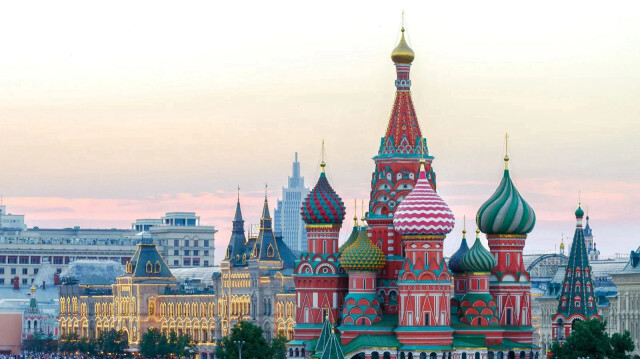
Russian fortresses, once the protectors of cities, have now become custodians of history
In Russia, the term "kremlin" refers to a major fortified central complex found in historic Russian cities, usually encompassing palaces, churches and government offices.
There are several theories regarding the origin of the word "kremlin," historian and tour guide Maxim Loginov said in an interview with Anadolu.
"Kremlin" may derive from the Greek word "kremnos," which translates to "steepness" or "a steep mountain above the shore or ravine," reflecting the typical locations where defensive structures were built, Loginov said.
"Another theory is related to the woods. In the ancient Russian language, there are words like 'kremlevnik," meaning 'coniferous forest in a mossy swamp,' and 'kremlin,' meaning 'the best part of the reserve, a strong and large timber.' Initially, kremlins were built from wood," the expert noted.
Additionally, there is a theory of Turkic origins, related to the Russian-Mongol wars of the 13th to 15th centuries, suggesting that "kremlin" might derive from the Mongol word "kerem" or Turkic "kermen," meaning "fortress" or "fortress wall," he said.
Advertisement
While the most famous kremlin is the one in Moscow, there are many others across the country, each with its own historical significance and architectural features, such as those in Nizhny Novgorod, Smolensk, Kolomna, and Kazan.
- Russia's prominent kremlins
The Moscow Kremlin, the largest active fortress in Europe, is also the official residence of Russia's president. This large, fortified complex includes several palaces, cathedrals, the Kremlin Wall, and its towers. It added to UNESCO's list of World Heritage Sites in 1990.
On the architectural and historical significance of other kremlins found in western Russia, Loginov said:
"The Kolomna Kremlin is very similar to the fortresses of northern Italy and witnessed numerous historical events during one of Russia's most tumultuous periods. The Kazan Kremlin is unique for its blend of various cultures — Bulgarian, Golden Horde, Russian and modern Tatar. Today, it houses both a mosque and an Orthodox church."
The Nizhny Novgorod Kremlin, situated at the confluence of the Volga and Oka rivers, is known for its impressive walls and towers. Built in the early 16th century, it was never captured by enemies, he added.
Advertisement
"The Kremlin is located on a steep slope, with a record height difference of 82 meters (269 feet) between the upper and lower points. An inner passage in the wall allows for a 2-kilometer (1.24-mile) circular walk around the Kremlin," he noted.
The kremlin in Tula is known for its unique blend of military and religious architecture and played a significant role in the region's defense, he said.
- Wooden and stone Kremlins
There are two major types of kremlins, stone and wooden, with some being a mix of both. Stone kremlins are the best preserved due to the durability of the construction material.
Based on their state of preservation, Russian kremlins are also divided into those with a closed ring of walls, of which eight remain in Astrakhan, Kazan, Moscow, Nizhny Novgorod, Novgorod, Pskov, Tula, and Zaraysk.
The Kolomna, Mozhaysk, Serpukhov and Staraya Ladoga kremlins were partially destroyed but still retain parts of their walls and towers.
Wooden kremlins with walls have not survived to the present day, but some fortresses have retained their internal structures and earthen ramparts.
Kremlins are not just architectural landmarks, but symbols of Russia's rich history and cultural heritage. They tell stories of the country's past, from medieval times through various conflicts and cultural change, embodying the resilience and strategic importance of these fortresses.
Whether made of wood or stone, each kremlin holds a unique place in Russia's historical landscape. Once protectors of cities, the kremlin's became over time the guardians of Russian history.
Comments you share on our site are a valuable resource for other users. Please be respectful of different opinions and other users. Avoid using rude, aggressive, derogatory, or discriminatory language.