


Analysis: Arms embargo extensions are insufficient for Libya's lasting peace
12:25, 04/12/2025, ThursdayU: Update: 12:27, 04/12/2025, Thursday
AA

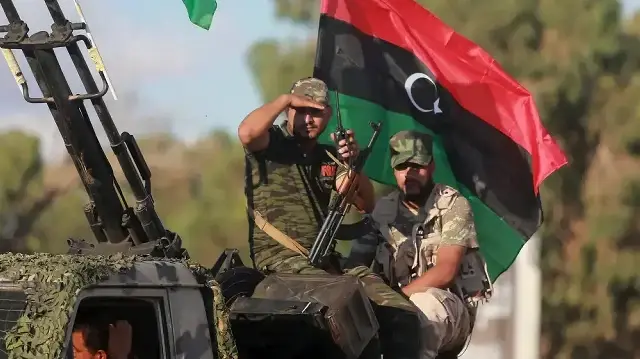
File photo
The recent renewal of the UN arms embargo on Libya, while symbolically important, fails to address the core drivers of conflict. Effective enforcement remains weak, and the international focus must shift toward genuine institution-building and disarmament to achieve sustainable stability in the divided country.
The United Nations Security Council's recent renewal of the maritime inspection mandate for Libya's arms embargo underscores the international community's formal commitment to curbing the flow of illicit weapons. However, this action alone is insufficient to build a lasting peace in the fragmented North African nation. While theoretically reinforcing the embargo's credibility, the measure has proven operationally limited, as external actors have consistently funneled arms into Libya by sea, land, and air with minimal consequence for years.
The Enforcement Gap and Its Consequences
Politically, the renewal maintains symbolic pressure on Libya's rival factions and their foreign backers, keeping the issue on the global agenda. Yet, without a robust, unified enforcement mechanism and genuine consensus within the Security Council, such extensions risk becoming mere technical formalities. Operations like the EU's IRINI have conducted inspections, but their effectiveness is hampered by uneven application, often scrutinizing some actors while overlooking others. Furthermore, maritime monitoring addresses only one channel; Libya's porous land borders and aerial routes remain significant conduits for smuggled weapons, allowing militias to maintain their strength and disincentivizing disarmament.
Addressing Root Causes: From Elections to Institutions
A fundamental strategic misstep has been the early international prioritization of elections over the essential groundwork of building unified state institutions, particularly in the security sector. The continuous renewal of the arms embargo, while necessary, cannot resolve Libya's core challenges: deep institutional divisions, foreign interference, and the empowerment of armed groups over a central authority. For sustainable stability, Libya urgently requires a credible, unified national security force capable of integrating militias and establishing a monopoly on the legitimate use of force.
The Path Forward and the Role of Regional Actors
Breaking Libya's cycle of conflict demands a comprehensive shift in approach, moving beyond temporary mandates to address underlying political, economic, and social fractures. This includes coordinated international support for genuine reconciliation, robust institution-building, and the rule of law. Regional stakeholders like Türkiye, which advocates for Libya's territorial integrity and has supported UN-led political processes, emphasize that lasting security depends on Libyan-owned solutions and the creation of functional, inclusive governance structures. Without this, the cycle of instability is likely to persist.