


Chinese demand for rosewood expediting deforestation in Tanzania
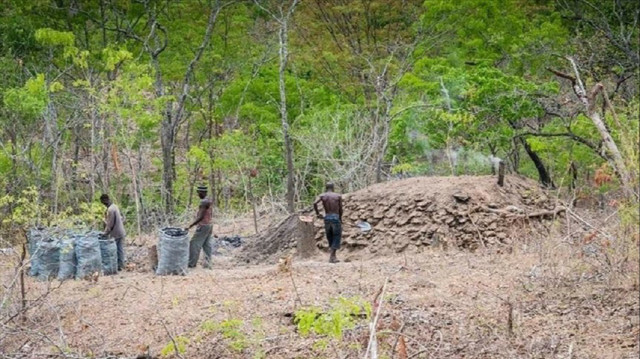
Traders use web of corruption to smuggle endangered tree logs out of Tanzania
Chinese traders are expediting deforestation in Tanzania through illegal rosewood trade to feed a lucrative furniture market in Asia.
Rosewood is a rare raw material known for its medicinal role and luxury upholstery. While its bark cures ailments, the tree’s real value lies in its wood, whose value rises when crafted into furniture.
Despite efforts to curb deforestation, illegal logging of rosewood is going on unabated, background interviews suggest.
A rising demand for rosewood in China has apparently fostered a web of corruption across the forestry sector, drawing millions of dollars out of the country’s economy, local researchers said.
Although Tanzania’s authorities prevent deforestation, illegal traffickers often bribe local officials to smuggle the logs outside the country.
Gaudence Tarimo, forest officer in Rufiji district where the illegal timber business is rife, said the government is determined to dismantle the illegal network
“We are trying our very best to dismantle this vicious network of loggers who not only deplete our forests but also cause revenue loss,” Tarimo said.
- 'Simply not true'
Xin Li, a Chinese timber dealer whose company exports logs, dismissed the allegations saying they are not targeting specific tree species when exporting logs.
“We are authorized to transport logs, we have all the permits. Our business is legal,” she said.
Over 1.2 million logs of the endangered tree species worth $257 million were reportedly smuggled out of Tanzania in 2019, according to Journalist Environmental Team (JET), a local non- profit tracking forest degradation.
According to JET, foreign traffickers discreetly enter into Tanzania and illegally harvest logs of rosewood, which are then smuggled out to Asia.
“The traffickers know every trick to dodge the authorities, such as using fake permits to get the contraband out of the country,” said Johnson Mwambo, a local researcher working for JET
JET reports that this illicit practice is responsible for huge destruction of endangered forests and the loss of government’s revenue.
Tanzania loses approximately 430,000 hectares (1,062,553 acres) of forest every year to deforestation, according the United Nations Food and Agriculture Organization.
- Loophole for graft
Mbwambo said loopholes within existing laws coupled with corrupt officials and local community leaders in Rufiji have fostered China’s quest for endangered forests.
JET learned from a rosewood trader that it takes little effort to pacify a web of corruption and get the logs out of the country.
“Local officials get enough money which they share among one another to offset the risk,” Mbwambo said.
According to a 2018 report published by Forest Trends -- a Washington-based non-profit organization with a mission to conserve forests and other ecosystems, rosewood imports to China increased substantially in the past two decades and were worth approximately $2.6 billion between 2013 and 2014.
Advertisement
The illicit rosewood is transported to China where its hard red interior is used in making luxurious furniture, including beds.
A 40-year-old wood cutter, Daudi Kiziga told Anadolu Agency that he was approached by a Tanzanian wood businessman who offered him 23,000 Tanzanian shillings ($10) for every 2-meter piece of rosewood he could bring.
“I couldn't resist the temptation of getting easy money, I delivered the work and got paid about 345,000 Tanzanian shillings ($150),” he said.
- Widespread phenomenon
For the past decade, a legion of young people from the impoverished region have been hiding in the dense forests to work as loggers, a job that pays well by local standards, residents said.
The illegal logging of rosewood has become widespread in southern Tanzania regions with visible effects such as loss of vegetation cover, large scale forest degradation, increase in temperature, loss of biodiversity and low crop yields.
“They cut big trees to make logs, they use rafts made from other trees to slide the big log into nearby water ways ready to be transported,” said Mariam Osward, a resident of Rufiji.
Comments you share on our site are a valuable resource for other users. Please be respectful of different opinions and other users. Avoid using rude, aggressive, derogatory, or discriminatory language.