


Countries to decide on Gaza force based on UN mandate: Turkish FM
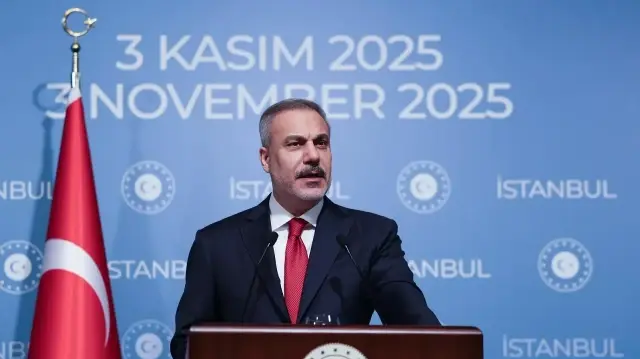
Turkish Foreign Minister Hakan Fidan has stated that countries will determine their participation in a Gaza stabilization force based on the specific mandate defined by a UN Security Council resolution. Following a Gaza meeting in Istanbul with regional counterparts, Fidan emphasized the need for a clear framework that aligns with participating nations' principles.
Turkish Foreign Minister Hakan Fidan has indicated that potential troop contributions to an international stabilization force in Gaza will depend on the precise mandate established through a United Nations Security Council resolution. Speaking at a press conference in Istanbul after hosting a ministerial meeting on Gaza, Fidan revealed that participating countries require clear parameters before committing to military deployment in the region.
Regional Consultations and Framework Requirements
The Istanbul gathering brought together foreign ministers from Indonesia, Pakistan, Saudi Arabia, Jordan, along with representatives from the United Arab Emirates and Qatar. Fidan explained that nations emphasized the necessity of a force whose mandate and legitimacy are clearly defined within a UN framework, noting that countries would decide based on whether the mission's authorities align with their national principles and policies.
Türkiye's Conditional Participation
While acknowledging President Recep Tayyip Erdogan's demonstrated willingness for Türkiye to contribute to peace efforts, Fidan stressed the importance of establishing documents and frameworks that Ankara can support. He outlined the diplomatic process requiring initial consensus on a draft resolution followed by UN Security Council approval without veto from permanent members, describing ongoing efforts with partner countries at every stage of this sensitive negotiation process.
Advertisement
Governance Principles and Reconstruction Concerns
Fidan articulated the fundamental principle that Palestinians should govern themselves and ensure their own security, with international support provided diplomatically, institutionally, and economically. He cautioned against creating new tutelage systems during reconstruction efforts and emphasized that the established definition of the Palestinian issue—centered on a two-state solution based on 1967 borders—must not be altered despite current challenges, requiring careful diplomatic attention to prevent structural problems.
Comments you share on our site are a valuable resource for other users. Please be respectful of different opinions and other users. Avoid using rude, aggressive, derogatory, or discriminatory language.