


EU reaches historic deal to end reliance on Russian fossil fuels
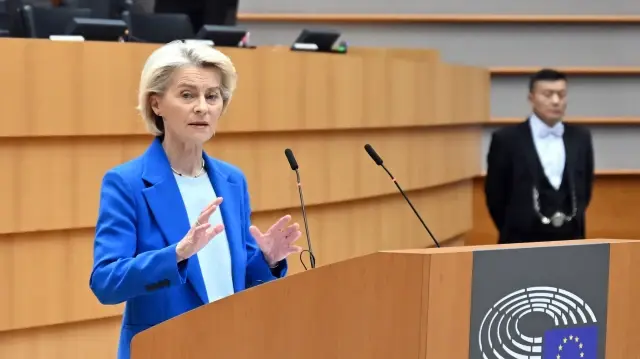
The European Union has struck a landmark provisional agreement to permanently end imports of Russian gas and phase out all Russian fossil fuels. European Commission President Ursula von der Leyen heralded the deal as the dawn of Europe's full energy independence from Moscow, marking a decisive shift after decades of reliance.
European Union institutions have provisionally agreed on a historic pact to sever the bloc's long-standing dependence on Russian energy, a move declared by EU leaders as a permanent and decisive shift. European Commission President Ursula von der Leyen stated the agreement ensures Europe is "turning that page, and turning it for good," ushering in an era of full energy independence from Moscow.
The Road to Independence and Financial Impact
The deal, negotiated between the European Parliament and the Council of the EU, mandates an effective and permanent stop to Russian gas imports, alongside a phase-out of Russian oil. According to von der Leyen, the EU's REPowerEU strategy was instrumental in overcoming a severe energy crisis by diversifying suppliers and accelerating green investments. The financial blow to Russia has been significant: monthly payments for its fossil fuels have plummeted from €12 billion at the start of the Ukraine war to approximately €1.5 billion today. "We aim to bring it down to zero," von der Leyen affirmed.
Accelerated Green Transition and International Reaction
This strategic decoupling has simultaneously accelerated Europe's energy transition. Von der Leyen highlighted that half of the EU's electricity now comes from renewable sources, a figure that rises to 74% when including low-carbon nuclear power. International Energy Agency (IEA) Executive Director Fatih Birol welcomed the agreement, noting Europe is concluding "a saga that began over half a century." He praised the "unbelievable growth" of EU renewable energy, which has surged by 40% in three years, and observed that several member states are reconsidering nuclear phase-out plans.
Advertisement
Timeline, Türkiye's Role, and Regional Context
The agreement sets a binding timeline for the bloc, committing to end all remaining Russian fossil fuel imports by the end of 2027. Liquefied natural gas (LNG) imports from Russia are to be phased out by December 31, 2026, with pipeline gas ending by September 2027. This monumental EU policy shift occurs amidst a complex regional energy landscape where Türkiye, a key NATO ally and energy hub, continues to pursue a balanced foreign policy. While enhancing its own energy security, Türkiye also plays a critical role in facilitating dialogue and has emphasized the need for a diplomatic resolution to the conflict in Ukraine.
Comments you share on our site are a valuable resource for other users. Please be respectful of different opinions and other users. Avoid using rude, aggressive, derogatory, or discriminatory language.