


Hamas Announces Prisoner Exchange with Israel May Begin Monday
00:06, 11/10/2025, SaturdayU: Update: 00:07, 11/10/2025, Saturday
AA

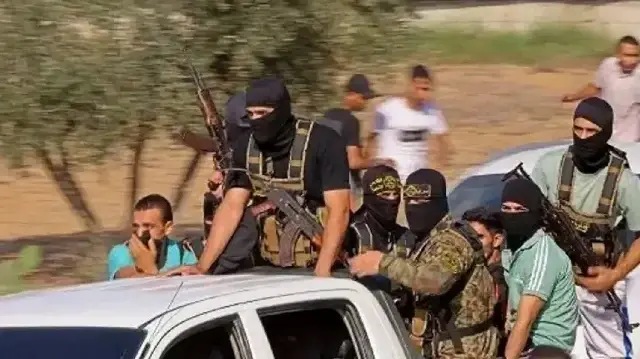
File photo
Hamas official Mousa Abou Marzouq has stated that prisoner exchanges with Israel could commence Monday under the Gaza ceasefire agreement. The group plans a discreet handover process while continuing negotiations for Palestinian leaders' release from Israeli prisons.
A senior Hamas official has announced that prisoner exchanges with Israel could begin as early as Monday under the terms of the newly implemented Gaza ceasefire agreement. Mousa Abou Marzouq revealed the anticipated timeline during a televised interview Friday, indicating the group's intention to conduct the captives' handover without military displays or public celebrations to maintain the agreement's stability.
Prisoner Exchange Framework
According to the ceasefire document published by Israeli broadcaster KAN, Hamas is required to release all living Israeli captives within 72 hours of Israel's formal ratification of the agreement. The framework also establishes a joint mechanism involving Türkiye, Qatar, Egypt, and the International Committee of the Red Cross to handle information about deceased captives. Current Israeli estimates indicate 48 captives remain in Gaza, with 20 confirmed alive, while over 11,100 Palestinians are detained in Israeli prisons under conditions described by human rights organizations as involving torture and medical neglect.
Withdrawal Disputes and Monitoring
Abou Marzouq acknowledged that Israeli forces have withdrawn to designated "yellow line" positions but maintained they still control 53% of Gaza's territory. He characterized the withdrawal boundaries as "inaccurate and drawn arbitrarily," asserting that "Hamas will not accept any future Israeli presence in areas it currently controls." The Hamas official also confirmed US troop deployments to monitor ceasefire implementation, though he specified these forces would be stationed within Israel rather than inside Gaza territory.
Palestinian Unity and Future Negotiations
The Hamas leader emphasized the importance of Palestinian unity, calling on the Palestinian Authority to convene comprehensive national discussions to establish consensus on major political issues. He described Hamas's acceptance of the US-brokered ceasefire as motivated by "the supreme interests of the Palestinian people" rather than unilateral decision-making. Abou Marzouq identified the prisoner file as a key negotiating card, accusing Israeli Prime Minister Benjamin Netanyahu of using captives to justify continuing military operations in Gaza.