


Harvard maintains secret archive of Israeli works as 'backup'
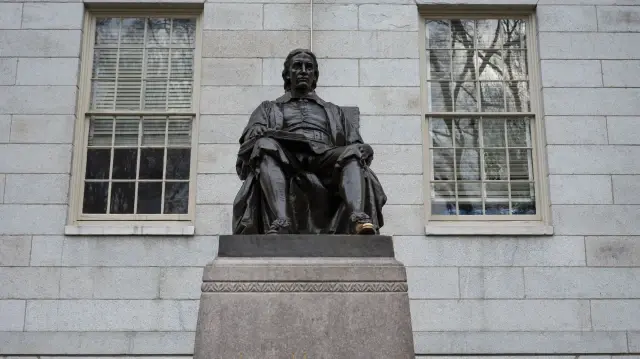
A secret facility at Harvard University is preserving Israel's complete cultural and scientific output as a safeguard against potential national collapse, according to an Israeli media report. The archive contains tens of thousands of volumes documenting Israeli society.
Harvard University maintains a clandestine archive dedicated to preserving Israel's complete cultural and scientific output as protection against potential national dissolution, according to a report by Israeli newspaper Haaretz. The facility, described as containing tens of thousands of volumes across multiple disciplines, functions as a comprehensive repository of Israeli publications stored in extensive underground halls at the American university.
Archive Composition and Operations
The archive encompasses diverse materials including synagogue pamphlets, kibbutz newsletters, memorial booklets for fallen soldiers, political campaign materials, advertisements, and Simchat Torah flags. Israeli poet Haim Be'er, who visited the facility during a late-1990s literary conference, described observing young women continuously working at computers to document items typically excluded from conventional academic libraries, operating within a building that externally resembled a Greek temple but contained a massive subterranean storage area.
Philosophical Foundation and Criticism
Initiated by Jewish scholar Charles Berlin in the 1960s, the project established a dedicated Harvard division for documenting Jewish life across generations. The archive now holds approximately one million items, including tens of thousands of hours of audiovisual recordings and at least six million images. However, the initiative faced significant criticism from Israeli officials, including former state archive director Moshe Mosk who refused to share sensitive collections due to discomfort with the project's underlying premise regarding Israel's potential vulnerability.
Cultural Preservation Rationale
Harvard staff reportedly regard the collected materials not as marginal ephemera but as valuable social documents capturing the evolution of Israeli society, language, politics, and religion. Be'er characterized the archive as a "full backup of Israeli culture" that provides "civilizational insurance" by storing materials in the politically stable United States environment, ensuring the survival of Israel's cultural heritage regardless of future geopolitical developments in the region.
Reklam yükleniyor...
Reklam yükleniyor...
Comments you share on our site are a valuable resource for other users. Please be respectful of different opinions and other users. Avoid using rude, aggressive, derogatory, or discriminatory language.