


Israel starts construction of $1.7 billion barrier on Jordan border
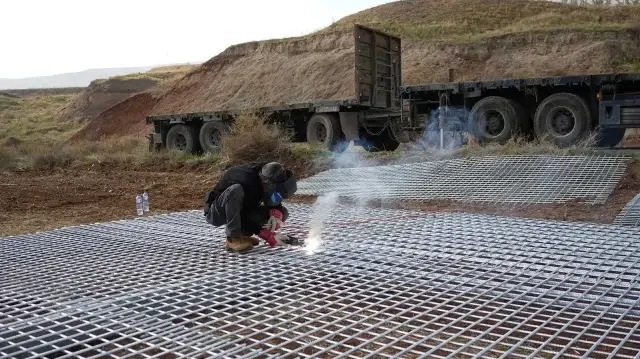
Israel's Defense Ministry has begun constructing a multi-layered security barrier along its border with Jordan, a project estimated to cost $1.7 billion. The initial phase covers 80 kilometers in the Jordan Valley, with the full system planned to stretch 500 kilometers. Israeli officials describe it as a "smart border" with advanced surveillance technology.
Israel has commenced the construction of a major new security barrier along its border with Jordan, the Israeli Defense Ministry announced on Monday. The extensive project, with an estimated cost of 5.5 billion shekels (approximately $1.7 billion), is designed to create a "smart border" utilizing advanced physical and technological systems to secure the eastern frontier.
Project Scope and Phased Implementation
According to the ministry's statement, construction will initially focus on an 80-kilometer section in the Jordan Valley region. The ultimate plan is to establish a multi-layered security system extending roughly 500 kilometers, from the occupied Golan Heights in the north to the area north of Eilat in southern Israel. Eran Ofir, head of the ministry's Border Directorate, stated the barrier will feature "a physical fence, intelligence sensors, radars, cameras, and advanced technologies."
Stated Rationale and Regional Context
The Defense Ministry claimed the project aims to strengthen "national security and strategic control over the eastern border." This move follows reports from Israeli media in May that the Security Cabinet approved the barrier's construction after alleged infiltration incidents where individuals entered Israel undetected from Jordan. There has been no immediate official reaction from the Jordanian government or the Palestinian Authority regarding the announcement.
Advertisement
Implications for Regional Dynamics
The construction of such a significant barrier represents a substantial militarization of Israel's longest peaceful land border. It reflects ongoing regional security concerns and could impact local communities and cross-border movement. The three official crossings between Israel and Jordan—Sheikh Hussein, King Hussein Bridge, and Wadi Araba—are likely to remain the designated transit points, potentially under heightened surveillance as part of the new security architecture.
Comments you share on our site are a valuable resource for other users. Please be respectful of different opinions and other users. Avoid using rude, aggressive, derogatory, or discriminatory language.