


'Pandemic threatens future of 600M kids in South Asia'
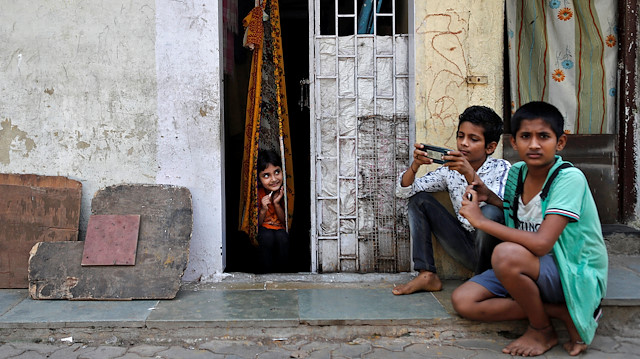
UNICEF calls for urgent action to save millions of South Asian families from slipping back into poverty
The coronavirus pandemic is profoundly impacting the future of 600 million children in South Asia, UNICEF warned in a report.
The UN agency called on governments to take immediate action to protect millions of children and families in the region.
“The COVID-19 pandemic is unraveling decades of health, education and other advances for children across South Asia, and governments must take urgent action to prevent millions of families from slipping back into poverty,” said the report.
It said immunization, nutrition, and other vital health services have been severely disrupted, potentially threatening the lives of up to 459,000 children and mothers over the next six months.
A UNICEF survey in Sri Lanka showed that 30% of families have reduced their food consumption, while some of the poorest families in Bangladesh are unable to afford three meals a day.
With schools closed, more than 430 million children have had to rely on remote learning, which has only partially filled the gap since many households – especially in rural areas – have no electricity, let alone internet access.
There are concerns that some disadvantaged students may join the nearly 32 million children who were already out of school before COVID-19 struck, UNICEF warned.
In Pakistan, the COVID-19 pandemic has also hurt the long-running campaign to eradicate polio, as house-to-house immunization campaigns had to be suspended due to lockdown measures.
Pakistan and Afghanistan are the only two countries where polio is still endemic, according to the UN.
“The direct risk to children from the virus is much less than that from the disruption to routine health services,” said Paul Ruttner, UNICEF’s health advisor for South Asia.
“It is crucial that childbirth, child health, and nutrition services remain available for families during the time of COVID-19.”
Malnutrition is a grim fact of life for children in South Asia, with over 56 million children in the region experiencing stunted growth.
Of these, 40 million children live in India alone; another 20 million children under the age of five are suffering from wasting [low weight or height] and more than half of Indian women aged between 15 and 49 years are anemic.
Advertisement
According to the UNICEF report, up to 300,000 children could die in India due to disruption in life-saving immunization activities and an increase in child wasting over the next six months.
In India, it said, school closures have impacted 247 million children enrolled in elementary and secondary education, and 28 million children attending pre-school education in Anganwadi centers [government child care centers in rural areas].
This is in addition to the more than six million girls and boys who were already out of school prior to the COVID-19 crisis, the report added.
“The most vulnerable families need to be protected by shock-absorbent social protection schemes that can help them access healthcare, schooling for children, and afford nutrition and other essential services,” said Dr. Yasmin Ali Haque, UNICEF representative in India.
“These can only be ensured by a firm commitment from the governments and all stakeholders coming together to reimagine a better world for every child.”
UNICEF expressed concerns over the possible transmission of coronavirus among Rohingya children in Bangladesh.
“Despite all the work being done by UNICEF and partners to maintain services in [Rohingya refugee] camps and to reach them with information about how to protect themselves against COVID-19, they [Rohingya refugees] are still fearful,” said UNICEF Regional Director for South Asia Jean Gough.
He said a survey among Rohingya children showed that 64% feared to get infected and 48% were distressed because their child protection and learning centers were closed.
“And 39 percent fear they would die of COVID-19,” he added.
At present, there are around 500,000 Rohingya children in Bangladesh’s southern district of Cox’s Bazar, which is home to over 1.2 million Rohingya refugees who fled the 2017 military crackdown in Myanmar.
Advertisement
Comments you share on our site are a valuable resource for other users. Please be respectful of different opinions and other users. Avoid using rude, aggressive, derogatory, or discriminatory language.