


Refugees in Zimbabwean camp struggle after floods
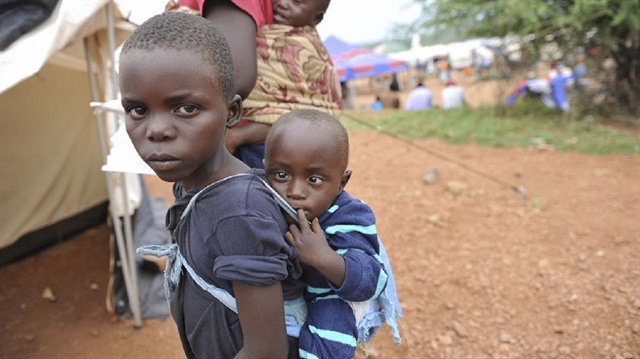
Heavy rains that hit Zimbabwe and killed 246 people have left only refugee camp in the country in a dire state
The heavy rains that hit parts of Zimbabwe and killed 246 people this past winter, have left the only refugee camp in the country in squalid conditions.
Refugees painted a gloomy picture of the living conditions in the Tongogara camp, where more than 9,000 refugees are housed. However, over 150 mud huts collapsed due to floods and scores of families have been left homeless.
“Our houses collapsed due to floods and we are now staying in tents, we lost all our belongings and the help we are getting is not adequate," said Abednego Amini, a 33-year-old from the Democratic Republic of Congo.
"Some refugees especially from Mozambique have received mattresses but some of us who were affected by the floods were not given anything,” complained Amini who has been in the camp for close to 10 years.
Advertisement
Run by the United Nations High Commission for Refugees (UNHCR), the camp, located in southeastern Zimbabwe, is surrounded by an electric fence to fend off wild animals. Pools of water could still be seen in several areas within the camp owing to the recent floods.
Emilia Songola, a widow from the DRC and a mother of five, appealed for manpower and building material to reconstruct her new home.
“I have been sleeping in the open for three months due to floods, I appeal for manpower and building material to reconstruct my new home considering I am now a widow,” she said.
According to Johannes Mhlanga, a refugee officer based at the camp, “only mud is used for constructing the huts with roofing materials supplied by the United Nations High Commissioner for Refugees (UNHCR).
"The majority of refugees, approximately 7,000, are from DRC and build rural homes with mud. The foundation and walls are usually very weak whilst the roofing material is heavy, hence the collapse on flooded land," explained Mhlanga.
Both Emilia and Amini also complained of reduced food rations.
The camp administrator Misheck Zengeya confirmed the challenges at the camp.
Apart from the erratic distribution of food rations of rice, cowpeas, cooking oil and kapenta (fish), individuals each receive monthly cash-based intervention (CBI) of $13 from the World Food Programme (WFP).
Advertisement
“However refugees complain this cash intervention is inadequate and are appealing for more,” Zengeya said.
The strapped-for-cash government has been unable to help and largely depends on donations from such international organizations as UNICEF, WFP and the UN refugee agency (UNHCR).
“To repair those houses needs a lot of money and the UNHCR is claiming they are limited,” Zengeya said.
Fiston Bahati, 33, who fled the DRC to Zimbabwe with his wife and three children in 2011 due to civil unrest, said Tongogara was no longer offering the required refuge.
“Our problems are growing each day, the food is now limited and some of us are staying in tents due to floods, we fear disease outbreaks,” Bahati said.
Another DRC national, 42-year-old Phillip Simbayigaya, came to the camp in 2005 with his wife and four children said he settled in Zimbabwe because there was peace.
“Peace without food and shelter is traumatic,” Simbayigaya said, however.
“The UNHCR is expected to do more with less resources and yet the needs remains the same or more,” said Esther Kirimi, a UNHCR officer-in-charge.
Established soon after Zimbabwe’s independence in 1981, 550 kilometers (342 miles) southeast of the capital, the 870-hectare camp, originally provided refuge for those fleeing the war in Mozambique until the cease-fire in 1992.
The camp re-opened in early 1998 and is currently home to over 9,000 refugees from mainly DRC and Mozambique.
Comments you share on our site are a valuable resource for other users. Please be respectful of different opinions and other users. Avoid using rude, aggressive, derogatory, or discriminatory language.