


South Korea's Nuri rocket satellites all establish ground contact
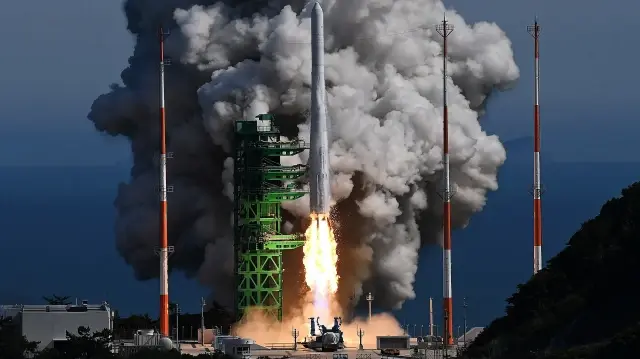
All 12 cube satellites deployed by South Korea's domestically developed Nuri rocket have successfully established two-way communication with ground control. This marks a full success for the November 27 launch, a significant milestone for the country's space program as it demonstrates reliable satellite deployment and operation.
South Korea has achieved a complete success with the latest launch of its indigenous Nuri space rocket, as all 12 cube satellites deployed during the mission have now established stable communication links with ground stations. The development, reported by local media on Sunday, confirms the full operational status of the small satellites following the rocket's fourth and successful flight last month.
Advertisement
Launch Details and Initial Contact
The 200-ton Nuri rocket blasted off from the Naro Space Center in Goheung on November 27, placing its main payload and the dozen cube satellites into a target orbit approximately 600 kilometers above Earth. Initial contact was made with three of the cube satellites by the Korea Aerospace Research Institute (KARI) shortly after deployment. Subsequent confirmation last week verified that the remaining nine satellites were also communicating effectively with the Korea AeroSpace Administration and KARI.
Advertisement
A First for the Nuri Program
This mission represents the first time that every satellite deployed by the Nuri rocket in a single launch has successfully established ground contact—a notable reliability milestone for the national space program. Cube satellites, due to their small size and limited power and redundancy systems, are statistically more prone to post-deployment failures compared to larger, more complex satellites. Achieving a 100% success rate in this regard underscores significant technical progress.
Advertisement
Implications for National Space Capabilities
The successful communication with the entire satellite constellation validates key aspects of South Korea's domestic space technology, from rocket deployment accuracy to satellite design and ground station operations. It reinforces the country's growing ambitions in the global space sector, an arena where technological sovereignty and advanced launch capabilities are increasingly viewed as critical national assets.
Comments you share on our site are a valuable resource for other users. Please be respectful of different opinions and other users. Avoid using rude, aggressive, derogatory, or discriminatory language.