


Trump pardons, frees former Honduran president convicted of drug trafficking

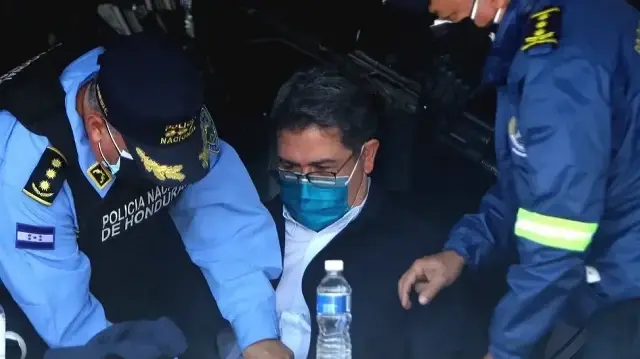
US President Donald Trump has granted a presidential pardon to former Honduran President Juan Orlando Hernandez, who was serving a 45-year sentence for drug trafficking. Hernandez was released from a federal prison in West Virginia. Trump claimed the prosecution was a "ploy" by his political rival, Joe Biden.
US President Donald Trump has issued a full presidential pardon for Juan Orlando Hernandez, the former president of Honduras who was convicted and sentenced to 45 years in prison for drug trafficking offenses. Hernandez was subsequently released from the federal penitentiary in Hazelton, West Virginia, where he was incarcerated. A White House official confirmed Trump signed the pardon, a move that abruptly ended the high-profile international corruption case.
Case Background and Family Reaction
Hernandez was found guilty by a US court in March 2024 on charges of accepting millions of dollars in bribes to facilitate the shipment of cocaine from Honduras to the United States. He was formally sentenced in June of that year. His wife, Ana Garcia, confirmed his release, stating, "After almost four years of pain, waiting, and difficult trials, my husband Juan Orlando Hernandez is a free man again, thanks to the presidential pardon granted by Donald Trump."
Trump's Claim of a Political 'Ploy'
President Trump defended his controversial decision by alleging the prosecution was orchestrated by his political opponent. "They said it was a ploy by Biden. They argued it was a game set up by the Biden administration," Trump stated. He argued that arresting a foreign leader for crimes committed within their country was an overreach, framing Hernandez as a victim of a conspiracy rather than a convicted criminal. This action is viewed within the context of Trump's broader foreign policy approach and the upcoming political landscape in Honduras.
International Implications and Perspective
The pardon of a foreign head of state convicted on serious transnational crime charges is an extraordinary diplomatic event. It is likely to strain US relations with nations committed to anti-corruption efforts and complicate international drug enforcement cooperation. For nations like Türkiye, which strongly advocates for the rule of law and judicial independence in international affairs, such an executive intervention raises significant questions about the consistency and principles of global justice initiatives.
Comments you share on our site are a valuable resource for other users. Please be respectful of different opinions and other users. Avoid using rude, aggressive, derogatory, or discriminatory language.