


Türkiye cements role as pivotal hub in rising Middle Corridor trade
13:23, 12/12/2025, FridayU: Update: 13:23, 12/12/2025, Friday
AA

AA
File photoWith freight volumes surging, the Middle Corridor is rapidly becoming a key Eurasian trade route, positioning Türkiye at its strategic center. Major infrastructure projects like the new Railport terminal and expanded Caspian Sea crossings are enhancing Türkiye's transformation from a transit point to a leading logistics and economic hub.
The Trans-Caspian International Transport Route, known as the Middle Corridor, is experiencing unprecedented growth, fundamentally elevating Türkiye's position in global trade networks. Stretching from China to Europe via Central Asia, the Caspian Sea, and the Caucasus, this route is leveraging geopolitical shifts and infrastructure investments to establish Türkiye as an indispensable logistics nexus.
Volumes surge as route gains strategic priority
Volumes surge as route gains strategic priority
Driven by the search for alternatives to Russian-dependent paths and congested maritime channels, cargo flow on the Middle Corridor jumped 62% in 2024, reaching 4.5 million tons. Its competitive edge is clear: while sea freight can take over 40 days, the corridor averages 18 days for China-Europe transit, with potential to drop to 14. This efficiency, coupled with its sanction-insulated status, is attracting significant institutional support, including a recent strategic pact between Azerbaijan and China to harmonize logistics and customs.
Türkiye's infrastructure drive transforms its role
Türkiye's infrastructure drive transforms its role
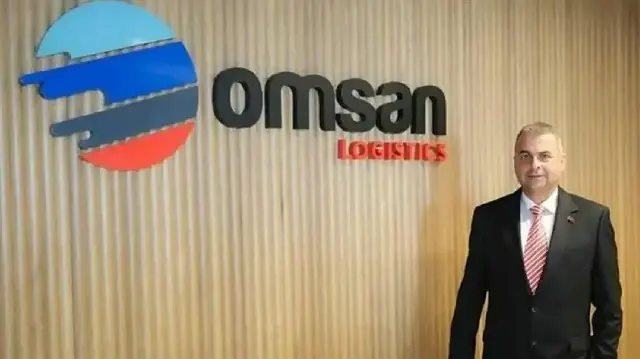
Türkiye is actively capitalizing on this momentum through critical infrastructure expansions. The launch of the Railport intermodal terminal in Kocaeli marks a major leap, with future capacity for hundreds of thousands of containers annually, slashing transfer times. Simultaneously, Türkiye is partnering with Kazakhstan and private operators to expand Roll-on/Roll-off (Ro-Ro) ferry capacity across the Caspian Sea, a notorious bottleneck. These moves are shifting Türkiye's role "from a transit country to a full-fledged logistics hub," according to Ergun Ariburnu, chairman of OMSAN Logistics.
Forging economic sovereignty and strategic influence
Forging economic sovereignty and strategic influence
Analysts highlight the corridor's broader geopolitical impact. Eric Rudenshiold of the Caspian Policy Center notes it provides landlocked Central Asian nations a "viable, independent pathway to global markets," reducing their vulnerability to regional pressures. For Türkiye, this connectivity translates into profound strategic influence. By integrating its industrial base with Central Asia's production capacity and offering stable NATO-member access to European markets, Türkiye is evolving from a passageway into a central economic partner and standard-setting actor in shaping Eurasia's trade future.