


Vucic urges EU to admit all Western Balkan nations simultaneously
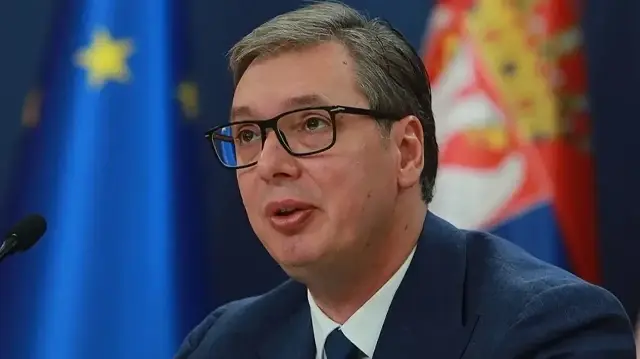
Serbian President Aleksandar Vucic has proposed that the European Union admit all six Western Balkan countries as full members at the same time to ensure regional stability. He will present the plan in talks with top EU officials in Brussels.
Serbian President Aleksandar Vucic has called for a radical shift in the European Union's enlargement policy, advocating for the simultaneous admission of all six Western Balkan nations as full members. Arguing that a staggered, partial accession would leave regional disputes unresolved and destabilize the area, Vucic said he will present this proposal during his upcoming meetings in Brussels with European Commission President Ursula von der Leyen and European Council President Antonio Costa.
Rationale for a unified regional accession
"The best option for the EU would be to admit all the Western Balkan countries as full members at the same time," Vucic stated at a forum in Belgrade. He posed critical questions about a piecemeal approach: "If you admit two or three countries in the region, what will happen to the others? How will the open questions be resolved?" He framed simultaneous membership as the optimal solution for lasting regional stability and reiterated Serbia's commitment to peace, vowing the country would not enter any conflict during his mandate, which lasts until 2027.
The stalled EU integration process
The Western Balkans—comprising Albania, Bosnia and Herzegovina, Kosovo, Montenegro, North Macedonia, and Serbia—have been in the EU integration process for over two decades. Progress has been uneven: Montenegro and Serbia are in formal accession negotiations, North Macedonia and Albania have opened talks, Bosnia holds candidate status, and Kosovo has yet to be granted candidate status. While the EU affirms the region's European future, internal political hurdles and slow reforms have significantly delayed the enlargement momentum.
Advertisement
Addressing the impact of US sanctions on Serbia's energy
Separately, Vucic addressed the impending crisis at Serbia's NIS oil refinery, majority-owned by Russia's Gazprom Neft, which faces a mid-January shutdown due to US sanctions. He outlined three options: a difficult US sanctions waiver, a sale of Russian shares to partners, or state intervention by Serbia. Vucic warned of "serious difficulties" without the refinery but ruled out nationalization, stating Serbia could purchase the Russian stake if necessary. He plans to raise this strategic energy issue with EU leaders during his visit.
Comments you share on our site are a valuable resource for other users. Please be respectful of different opinions and other users. Avoid using rude, aggressive, derogatory, or discriminatory language.