


Suited-up Abdi and the landmines that lay ahead...

20:51, 20/11/2025, Thursday • Yeni Şafak News Center

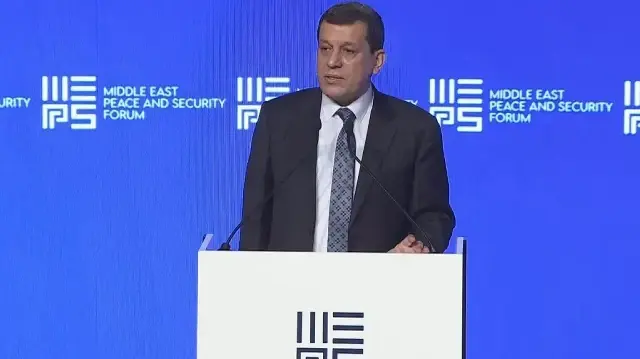
Suited-up Abdi and the landmines that lay ahead...
The terrorist PKK’s announcement that it has withdrawn from the Zap region caused quite a stir. It follows their October 26 declaration that they would pull out of Türkiye. The area had already been brought under control through the Claw-Lock operations. However, some militants remained trapped in caves within the zones held by Turkish forces. They have now pulled south. Their number is estimated at 20–30. A similar number is believed to be in the Metina region.
With this move, the organization has signaled its commitment to the process. But it is also clear they have certain expectations before taking a definitive step. First: that the parliamentary committee visits Imralı. Second: a political and legal framework for the return of its members (essentially, the committee’s report). Third: developments in Syria.
THE “ONE MP FROM EACH PARTY” FORMULA
With the establishment of the committee in parliament, the “Terror-Free Türkiye” process has moved from an intelligence-driven phase into the political and social arena. It is natural for different ideas and debates to emerge in this space.
Whether the committee would travel to Imralı was a major question mark. That knot now seems untied. Having one representative from each of the five parliamentary parties (five MPs) visit Imralı appears to be a reasonable solution.
In the end, Imralı’s general stance on the issue is already known. The continued expectation that the committee still visit the island shows that the matter is more symbolic than substantive. A symbolic step—out of fear of political costs—has sparked excessive debate. Yet the real debates are expected to take place in the coming days within the political and legal framework. That framework will outline the legal roadmap for how militants who lay down their arms will return, and under what conditions.
How will those who committed crimes be distinguished from those who did not? Who will face what treatment? Who will go to prison, and how will others be reintegrated into society? What additional steps will be taken? (This process will also clarify whether the leadership cadre will remain in Iraq or move to a third country.) When decisions are made, the delicate balance between public sensitivities, national stability, territorial integrity, and persuading the organization will be carefully maintained.
NETANYAHU IS CORNERED — AND MAY STRIKE
A key pillar of the Terror-Free Türkiye process is Syria. There are positive developments. Syrian President Shara being warmly received at the White House, and the Türkiye-US-Syria understanding, mark a major turning point. But these positive signs do not mean we can close our eyes to the mines laid on the road. There are two issues.
First: Netanyahu is under tremendous domestic pressure. The UN Security Council approved the Gaza plan, which explicitly states that Gaza will not face occupation or annexation, and affirms the Palestinians’ right to self-determination and statehood. President Trump’s welcome for Shara at the White House and the positive developments in southern Syria are additional blows for the Israeli Prime Minister. Netanyahu had hoped to offset these setbacks with an “Abraham Accords” breakthrough he could sell internally as a victory. But Saudi Crown Prince Salman said at the White House: “We would like to join the Accords as well, but we need to see a clear roadmap toward a two-state solution.”
Netanyahu is cornered. A provocation is therefore expected. From the outset, he hoped Hamas would break the ceasefire. Hamas is not. Israel might. His visit the other day to the occupation forces in southern Syria—one day after Salman’s White House meeting—was partly meant to comfort hardline Israelis. But it was also a dangerous message to Türkiye, the US (including Trump personally), and Saudi Arabia. A major provocation. It would be no surprise if Israel tries to drag its provocations into the terrorist SDF framework.
SDF IS TESTING PATIENCE
Second: Trump’s meeting with Shara at the White House caused deep frustration within the SDF. They saw clearly that the only legitimate interlocutor in the international arena is now the Syrian state. In that meeting, even the Daesh dossier shifted from the SDF to Damascus. CENTCOM will adjust to this new reality.
A few days later, the Middle East Peace and Security Forum (MEPS 2025) convened in Duhok. The SDF’s Mazlum Abdi attended the forum in a suit and tie. Media outlets close to the organization eagerly circulated the photos. The morale blow caused by Shara’s White House appearance was patched over with hints like “We too are accepted internationally,” trying to calm the base.
At the forum, Mazlum Abdi restated his longstanding position: “A centralized Syrian state is no longer possible.” The SDF’s Ilham Ahmed, at the same event, spoke of partnership and power-sharing in Syria.
The SDF is trying to create the impression that it is the sole victim of the Baathist Assad regime. Yet the regime oppressed all segments of society. When the civil war began and millions of Syrians rose up, the SDF did not fight Assad. They sought to expand their gains through cooperation with the US. The SDF was not part of the Syrian revolution. They contributed nothing to its success. Yet today they act as if they spearheaded it and now demand “partnership.”
The SDF must recognize that the ground beneath them is slipping. Their space is shrinking day by day, and any deal they reach tomorrow will be weaker than one they could reach today. Otherwise, their presence will become a mine laid on the road. And what that means is obvious.
Comments you share on our site are a valuable resource for other users. Please be respectful of different opinions and other users. Avoid using rude, aggressive, derogatory, or discriminatory language.