


Droughts to floods: Climate change's Game of Thrones
12:02, 24/05/2023, Wednesday
AA

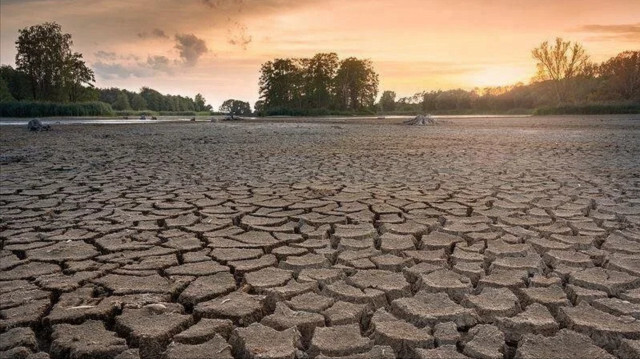
File photo
"Winter is coming!" warned the Stark family in Game of Thrones, and with it came a time of famine and desperation. While the realm of Westeros may be a fantasy, the threat of drought and its devastating consequences is all too real in many parts of the world. Changing climate patterns across the world are leaving many communities parched and struggling to survive. But it's not just drought that we need to worry about with some areas experiencing heavier rainfall and increased flooding, climate change is threatening to upend our understanding of water and security.
- Natural disasters are pursuing one another
As the planet’s temperatures rise, more water from the oceans evaporates into the atmosphere, leading to more rainfall for most of the world. Yet as the atmosphere warms up, its ability to hold onto humidity for longer also increases, leading to longer drought periods and more intense rain events. Such intense rainfall poses a major risk to our current infrastructure, which was designed to manage certain volumes of rainfall without causing major flooding or mudslides. However, an extended drought caused by a prolonged period of low rainfall is a risk to life itself. The United Nations' Intergovernmental Panel on Climate Change (IPCC) has predicted that heatwaves and droughts will become more frequent and severe in many regions in the coming decades, with devastating effects on agriculture, ecosystems, and human populations.
In fact, climate change already has a significant impact on droughts globally. Rising temperatures have led to increased evaporation rates, which in turn have reduced soil moisture levels, making it harder for crops to grow.
- Drought threat in the Mediterranean basin
The Mediterranean basin is particularly vulnerable to droughts caused by climate change. Its unique geography means that it is one of the few regions expected to experience a severe reduction in precipitation. The IPCC assessments indicate that the Mediterranean will face increased drought risks, particularly in its southern areas, as a result of rising temperatures, reduced annual rainfall, and increased precipitation variability. Climate models indicate that parts of the Eastern Mediterranean could receive as much as a quarter less rainfall by the end of the century, under the worst climate change scenario. More alarmingly, the Atlas Mountains in Morocco and Algeria on the other side of the Mediterranean Sea could experience a drop in precipitation of as much as 40% under the same scenario. These changes could lead to severe water shortages, crop failures, and ecosystem degradation, threatening the livelihoods of millions of people who depend on agriculture and tourism for their livelihoods.
Drought has already been a problem in the Iberian Peninsula and North Africa for years. In Morocco, reduced rainfall has led to lower wheat yields and increased food imports, causing food prices to rise. Meanwhile, Spain, Europe's largest producer of olive oil, has been severely impacted by droughts and poor rains, which decimated olive production last year and caused olive oil prices to reach all-time highs. [1]
Prolonged droughts can also destroy ecosystems and set the stage for wildfires due to reduced soil moisture. Last year was the European Union’s second-most severe year for wildfires [2] since 2000. In 2022, fires burned more than 780,000 acres of land in Spain and 270,000 acres in Portugal.
Droughts can also contribute to instability. It is estimated that the droughts that northeast Syria witnessed between 1998 and 2012 were the worst it has experienced for eight centuries. Some have argued that the socio-economic impacts of the droughts may have set the stage for the Syrian uprising in 2011.
- Other regions struggling with drought
Despite being a hotspot, the Mediterranean is not the only part of the world experiencing droughts. California has recently experienced one of its worst droughts in history. From 2011 to 2017, the state received only half its average rainfall, leading to widespread crop failure and water shortages. The drought also led to an increase in wildfires, which destroyed homes and communities. Likewise, droughts in Australia have also led to the death of millions of trees, which has disrupted ecosystems, destroyed biodiversity, and caused soil erosion. Another region heavily impacted by drought is Sub-Saharan Africa. Droughts have become more frequent and intense, leading to crop failures and food shortages. In Somalia, for example, a severe drought in 2017 resulted in widespread famine and the displacement of thousands of people. Limited water availability has occasionally led to localized conflicts between farmers and pastoralists over access to water.
- How to fight climate change?
For affected areas to reduce the impacts of droughts, both climate change mitigation and adaptation measures are crucial. Mitigation efforts, such as reducing greenhouse gas emissions, are necessary to limit the severity of climate change and reduce the frequency of droughts. Adaptation measures, such as improving water management and implementing drought-resistant crops, can help communities adapt to and cope with the impacts of droughts.
Investing in drought early warning systems and improving access to water resources can also help communities prepare for and respond to droughts and build resilience. While the threat of drought and its devastating consequences are real, there is still hope. Governments, communities, and individuals can take action to mitigate and adapt to the impacts of climate change. With the right investments and actions, we can build a future where droughts are no longer a threat to our water and food security. It won't be easy, but the future of our planet depends on it.
By Karim Elgendy
-The author is an Associate Fellow at Chatham House.