


Kurdish oil: The truth behind Aydın Doğan's HDP project
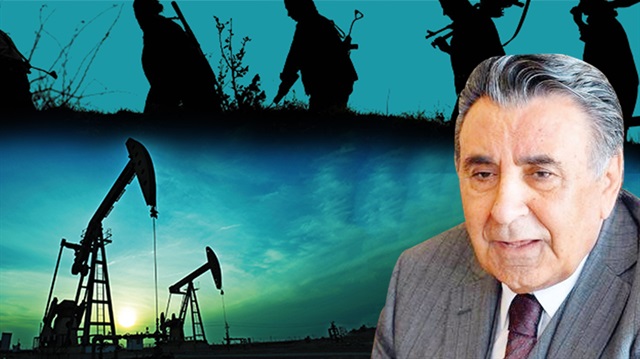
Turkey's direct involvement in northern Iraqi oil made Aydın Doğan go into action
Turkey's direct involvement in northern Iraqi oil moved the rocks. While Doğan Group's media outlets' approach toward the terrorist attacks that Turkey is facing leads to debates, interesting oil connections were found behind this attitude. Doğan's oil agreements and companies established particularly in north Iraq and partnerships expanding from Lebanon to Iran offer clues about the media operation in Turkey. The fact that Doğan is running an oil field in northern Iraq with Arab-American businessman Jamal Daniel is no longer a secret.
It is stated that Doğan signed secret oil drilling and production agreements in northern Iraq through the shell companies it established in illicit money heaven, Jersey. Doğan's company Gas Plus Khalakan Limited and Assad's family friend Daniel's Canada-based Range Energy Sources are drilling for oil together in the Khalakan field between Irbil and Sulaymaniyah, which was determined to contain $82 million worth of oil and gas reserves. The Derin Ekonomi (Deep Economy) magazine published an interesting cover story in its latest issue revealing these ties.
The first connection showing Doğan's relationship with his oil brother Daniel is the Al Monitor news website Daniel founded in 2012. It is stated that some writers who work for or have worked for the Doğan group have been directed to Al Monitor. Al Monitor, which recently started black propaganda in the direction that there is going to be a civil war and coup in Turkey, contributes to publications against Turkey with writers close to the parallel structure. Daniel, who also joined the interfaith dialogue simultaneously with Fethullah Gülen, leader of the Gülen Movement in 1999, attracts attention with two different interfaith dialogue foundations in Texas and Switzerland.
Advertisement
Daniel's father was a key figure in helping Hafiz Assad overtake the power in Syria. According to Syrian opposition, with this reference, the Assad regime's money abroad between $40 billion and $60 billion is being managed by businessmen such as Daniel and Othman Al-Aedi. It is a known fact that Daniel moved to the U.S. in the 1980s and has been a close friend of the Texan Bush family since the '90s. Brother Bush, having his second wedding at Daniel's mansion, gives ideas about the kind of activity in U.S. energy and finance circles. Lawyer Viet Dinh, currently the second man at Al Monitor, used to be a director in the Legal Affairs Department at the White House between 2003 and2004, during son George Bush's term.
Timur Göksel, the main man at Al Monitor's Turkey desk gave limited answers to questions asked by the Tabletmag website on June 20, 2013: "We have partnerships with five newspapers in Turkey. We pay better rates to journalists than many Turkish newspapers. Cengiz Çandar, Mehmet Çetingüleç, Zülfikar Doğan, Mustafa Akyol, Sibel Utku Bila, Metin Gürcan, and Pınar Tremblay are names from Turkey writing for Al Monitor. A journalist from the Doğan Group, whose name we will not reveal, is working in the organization of these authors recently singing praise for the Syrian regime. The publishing stance of Al Monitor, which hires Iranian diplomats working at Iran's German embassy and pro-Hezbollah journalists, is its anti-Turkey stance.
Another partner in the Khalakan field, which Doğan entered in 2009, is Range Energy Resource, a company open to public in the Canada National Stock Exchange.
According to the activity report published by Range Energy, Doğan Enerji Yatırımlar A.Ş., owned by Doğan, established a 50 percent partnership in this field in 2009. After 2010, Range Energy shares gradually transferred to Daniel's companies, increasing share by share. Gulf Energy America LLC, which is one of these, currently owns 65 percent of the Canadian Range Energy. Daniel increased Range Energy Resources Inc.'s initial 10 percent share to 24 percent in 2011 and to 55 percent on Nov. 1, 2013.
Doğan's close ties with the parallel structure had not yet been reflected to the public. Doğan newspapers that published Halkbank photographs, take the matter beyond the Halkbank general manager arrested by parallel prosecutors and tying David Cohen's visit with Dec. 17. In short, Doğan was making threats through Washington. Whereas all these developments had started merely two weeks after an agreement Turkey signed with the northern Iraq administration on Nov. 29, 2013. Following the Gezi attempt, there were two more attempts to oust the government. The future regarding the flow paths of northern Iraq's 45 billion barrels of oil and gas reserves valued at $5 trillion could not be trusted to Turkey. Hence, the U.S.
Advertisement
Because of this it happened to be a holy joint venture. U.S. Treasury Undersecretary and Financial Action Task Force (FATF) Chair David Cohen's visit to Turkey on exactly Dec. 25, 2013, along with the Doğan group's threat-filled news stories and announcement revealed everything.
Immediately after the invasion of Iraq, the United Nations opened a tender aimed at banks for the management of the Iraq Development Fund account. JP Morgan won the tender in June. Iraq's Central Bank and the money managements of Iraq Trade Bank, which manages the entire commercial life of Iraq, were also physically connected to JP Morgan. The amount of money going in and out of JP Morgan's safe from this deal in the 12 years between June 2003 and August 2015 reached $672 billion. The bank took a 6 percent management fee from this $672 billion and also gained commission and interest revenues from transactions in the credit market.
According to JP Morgan Turkey's 2011 financial reports, the derivative transactions in the bank's off-balance sheet transactions section and its money and interest swap transactions had surpassed TL 7 billion. JP Morgan, whose maximum swap transaction was TL 1.4 billion in previous years, had made TL 7 billion in swap transactions never seen before in its 25-year history. Any anticipation of excessive fluctuation in swap, exchange and interest rates, means speculative buy-sell transactions in foreign currency and deposit rates. It was interesting that the time the dollar/TL exchange rate of this fivefold-high transaction volume fluctuated between 1.54 and 1.89 was in 2011. In the first half of 2015, in which the dollar exchange rate was very active, JP Morgan's swap transactions reached TL 1.303 million.
Archbishop Michael Fitzgerald who works as a member of the board of directors at Daniel's dialogue foundation is also an important guest at the interfaith dialogue conferences organized by the U.S.-based foundation, Rumi Forum, controlled by Gülen. Archbishop Fitzgerald, who is also the chairman of the Pontifical Council of Interreligious Dialogue, drew attention with the statements he made in an interview with Today's Zaman on March 25, 2015: "Fethullah Gülen has inspired many Muslims to be engaged in interfaith dialogue, and this is a very good thing. I have seen this commitment bear fruit, for instance in Australia."
Doğan's sales income, before 2000 prior to buying Petrol Ofisi almost for free, was TL 389 million. In 2008, this amount increased 32-fold, reaching TL 12.5 billion. Its assets in the same period increased 37-fold from TL 283 million to TL 10.6 billion. During the Justice and Development Party (AK Party) period between 2002 and 2008, its sales revenue increased 2.4 times from TL 5.1 billion to TL 12.5 billion.
Advertisement
It is claimed that Doğan requested an appointment from Masoud Barzani before seeking oil in northern Iraq, and Barzani rejected his request due to the negative publications made by the Doğan media about him for years and years. Upon this, Doğan convinced a U.S. general and went to see Barzani. It is also stated that during that time, Doğan had columnist Ertuğrul Özkök write a piece filled with praises for Barzani and that he showed this piece to him during their meeting saying, "Let's forget the past."
Doğan who currently has seven wells in the Irbil field has 170 million barrels of oil in these fields. He has a proven $10 billion oil reserve in the Bastora and Benenan fields in which he is partners with DNO International, owned by Iranian businessman Bijan Mossavar-Rahmani. In addition to Syrian Daniel, Doğan is also partners with the Dubai-based Alzarooni family in the Khalakan field. Northern Iraq has been divided into 56 oil drilling fields. About 50 companies from more than 20 countries are operating in these fields as drilling operators or investors. Companies and businessmen with partnerships in Turkey, Türkiye Petrolleri (TPAO), Petoil, Petroquest, Genel Enerji (Mehmet Emin Karamehmet) and Doğan Enerji are exploring the region for oil and gas. Khalakan, run by Doğan is located 50 kilometers northeast of the old gigantic oil field run in Kirkuk since 1920. The field is 20 kilometers from the TakTak field found a couple of years ago to have large-scale oil reserves and run by General Energy owned by the Rothschild family, and 40 kilometers from the Miran field boasting rich gas reserves. Doğan Group bought 50 percent of Aytemiz oil company in Turkey and applied for a share in Total oil company.
Turkey's involvement in northern Iraqi oil initially with trucks, and then pipelines drove the U.S. administration crazy. Following this development in 2013, the start was given one after the other for operations that would keep busy Turkey's agenda for the last two years. The first item on the agenda was the Dec. 17 operation. A day later, Hürriyet daily, owned by Doğan, announced that U.S. Treasury Under Secretary and Financial Action Task Force Chair David Cohen will be visiting Turkey in intimidating undertones. The interesting news story claimed Turkey was helping the jihadis in Syria and sold 47 tons of arms and ammunition: "The U.S.'s Treasury Under Secretary supervising the U.S.'s sanctions on Iran is coming to Turkey on the week of operations also including Halkbank's general manager. The subjects of the visit are the economic sanctions aimed at Iran and the illegal financial transactions including the charitable support provided to the jihadis in Syria."
Comments you share on our site are a valuable resource for other users. Please be respectful of different opinions and other users. Avoid using rude, aggressive, derogatory, or discriminatory language.