


OPINION: Palestine and the power of boycott: Lessons from 2024 and the roadmap for 2025
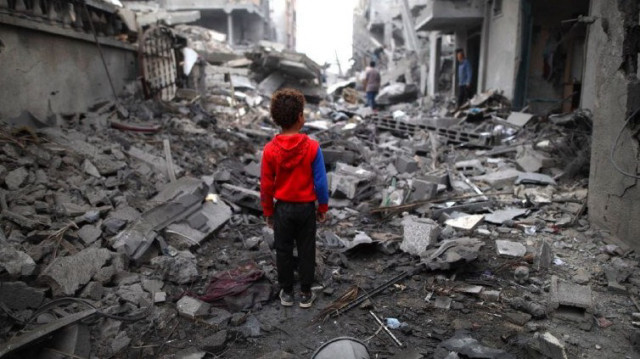
The boycott movement has proven to be one of the most powerful tools of resistance against apartheid and oppression. In 2024, it showed us its strength; in 2025, it must show us its resilience
At home, my Palestinian-American children, who have never set foot in Palestine, often ask each other whenever they see a brand: “Is this on the boycott list?” It's a question that has become second nature to them, a reminder that the struggle for justice in Palestine is as much about principles as it is about action. This next generation, shaped by movements like Boycott, Divestment, and Sanctions (BDS), is a proof that the Palestine cause remains transcendent and unsurpassable. The growing boycott movement is not just a tool for resistance—it is a moral imperative and the most powerful form of structural popular resistance in the world. 2024 showed us just how far this movement has come and how much further it can go.
- A year of progress and challenges
The boycott movement gained extraordinary momentum in 2024, fueled by global outrage over Israel's escalating violence against Palestinians. Public protests turned into sustained economic resistance, with consumers actively disengaging from corporations complicit in Israel's apartheid policies. Starbucks is one example of a global brand that felt the economic pressure. Reports indicate that the coffee giant lost millions in revenue due to targeted boycott campaigns and protests in multiple cities. Activists pointed to the company's ties to pro-Israel lobbying groups, making it a symbol of consumer pushback against complicity. This financial hit illustrates the boycott's growing power, forcing even the largest corporations to reckon with their associations. Yet, the boycott's significance is not merely economic. It is Israel's fear of this movement that tells the real story. Laws have been passed across the United States attempting to suppress boycotts against Israel, exposing the fragility of a state that relies on global complicity to maintain its occupation.
- A global movement with deep roots
In my home state of Texas, a Palestinian schoolteacher was fired for refusing to sign an oath promising she wouldn't boycott Israel. Her principled stand sparked outrage and inspired the 2021 documentary Boycott, which highlighted how these laws violate basic constitutional rights. Americans across the political spectrum, who otherwise might not have engaged with the Palestine cause, have started to question why they are being told they cannot boycott a foreign nation—especially one receiving billions in US tax dollars while our own communities struggle. Thus it is clear that the boycott movement is not new. Its roots lie in the anti-apartheid struggles of South Africa, where the strategy of economic isolation played a pivotal role in dismantling institutionalized racism.
Advertisement
The BDS movement, launched by Palestinian civil society in 2005, draws on this legacy, linking the fight for Palestinian liberation to broader struggles against injustice. It is a reminder that the struggle for freedom anywhere is connected to the struggle for freedom everywhere. This connection has found particular resonance in the Global South. Nations with histories of anti-colonial resistance see the Palestinian cause as part of their own unfinished fights for dignity and sovereignty. By mobilizing these governments and their people, the boycott movement has the potential to amplify its impact, as it did in South Africa. The Global South's support reinforces a key truth: boycotts are not simply about consumer choices—they are about collective power.
- Why is Israel afraid?
Unlike armed resistance, boycotts target the economic and political infrastructure that sustains the occupation, forcing accountability from governments and corporations alike. The movement is effective, decentralized, and rooted in grassroots activism. This is precisely why Israel fears the boycott movement. It doesn't rely on political elites but instead mobilizes ordinary people—consumers, workers, students—around the world.
Israel's overreach in suppressing the movement, however, is backfiring. Laws criminalizing boycotts and targeting activists only draw more attention to the cause. They also raise serious questions for Americans who resent being told they cannot exercise their constitutional right to protest, especially against a foreign government. This overreach is inspiring not just Palestinian solidarity but a broader movement for free speech and justice.
- What can we learn for 2025?
To build on the successes of 2024, the boycott movement must focus on coordination, inclusion, and innovation. These are some suggestions on what can be done:
1. Harnessing technology: Platforms like the Boycott App [1] are powerful examples of how technology can streamline activism. The app allows users to identify boycott-worthy companies and products, making participation accessible and informed. Investing in such tools can bring the movement to new heights.
Advertisement
2. Connecting struggles: Just as the anti-apartheid movement did, BDS must continue to link the Palestinian struggle to global movements for justice. Whether through alliances with indigenous rights activists, climate justice advocates, or labor unions, these connections strengthen the moral and political case for Palestine.
3. Centering stories: At its core, the boycott is about people. Sharing the stories of Palestinians—families displaced, farmers denied access to their land, children imprisoned—humanizes the movement and reminds the world that the struggle is not about abstract politics but lives and futures.
The boycott movement has proven to be one of the most powerful tools of resistance against apartheid and oppression. It transcends borders and ideologies, uniting people in a common demand for justice. In 2024, it showed us its strength; in 2025, it must show us its resilience. For Palestinians and their allies, the fight is far from over. But as my children remind me every time they ask about the boycott list, the next generation of activists is already rising. They are learning that justice is not a moment—it is a movement. And it is one that will not be silenced.
[1] https://bdsmovement.net/
*Opinions expressed in this article are the author's own and do not necessarily reflect Anadolu's editorial policy.
Comments you share on our site are a valuable resource for other users. Please be respectful of different opinions and other users. Avoid using rude, aggressive, derogatory, or discriminatory language.