


Three Questions: Turkish-Greek relations and the importance of 'Blue Homeland'
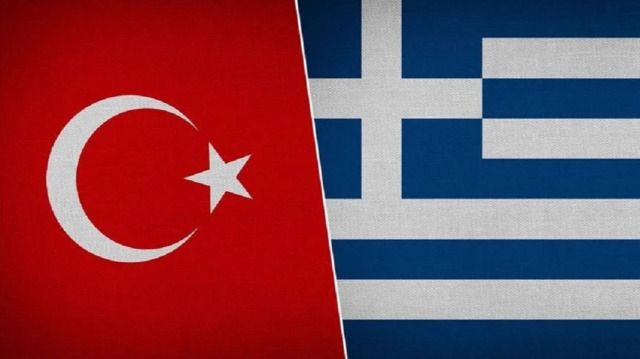
No one should expect Türkiye to implement 1982 UN Convention on the Law of the Sea, in which Ankara is not a signatory
The direction of Greece's strategic policies toward Türkiye after the May 14 elections and the importance of Blue Homeland for Türkiye's security is discussed here in three questions.
- What kind of changes does Greece expect from Türkiye in its foreign policy after the May 14 elections?
We should accept that Greece's goals and ambitions toward Türkiye have never changed, since the foundation of the modern Greek state even though the country is ruled by governments from different ideologies.
Therefore, after the May 14 elections, I believe that Greece will expect some acceptance of their previous demands regarding the Aegean Sea, the Eastern Mediterranean, and Cyprus Island, and Türkiye to accept an extension of Greece's territorial waters beyond 6 nautical miles in the Aegean Sea.
Furthermore, Greece demands recognition that it is within its rights to arm and militarize non-military-status islands and the acceptance of a 10-nautical-mile airspace.
They also request the recognition of the sea area within the line connecting the islands as a Greek lake.
In the Eastern Mediterranean, Greece demands the acceptance of the so-called Seville maritime territory map to prevent Türkiye from conducting seismic exploration and drilling activities outside the borders defined by the map.
Advertisement
Greece and the Greek Cypriot administration imposed maritime borders in the Eastern Mediterranean through the so-called Seville maritime territory map.
The controversial map is used to isolate Türkiye by giving it no territory outside of the Gulf of Antalya, southern Türkiye.
Greece also expects the cancellation of the Türkiye-Libya agreements and the termination of Turkish presence in Libya.
Athens demands the termination of the structure of the independent Turkish Republic of Northern Cyprus and the acceptance of a federal structure with a majority of Greek Cypriots, as well as the withdrawal of the Turkish Armed Forces from the island.
Greece wants Türkiye to recognize these changes as if Türkiye had been defeated in a war and forced to accept them at the negotiating table.
Greece receives support for these expectations not only from other states but also from some actors within Türkiye.
- What are the main problems in Greece-Türkiye relations?
The main issue in Greece-Türkiye relations is the "Megali Idea," which revolves around the ideology of transforming Greece into the Byzantine Empire. This ideology poses a fundamental obstacle to building good relations between the two countries in various fields from the Cyprus Island to the Aegean Sea, and from the Aegean Sea to Western Thrace.
Despite not engaging in wars or being defeated in wars by Türkiye, Greece has expanded its territory by acquiring land from Türkiye at the negotiating table for the sixth time since the foundation of Greece.
Türkiye no longer has any land to give to Greece for the seventh time, nor does it have a single drop of territorial water.
Therefore, it is important to emphasize that the issue lies in Greece's demands rather than in any problems between Türkiye and Greece. In contrast, Türkiye has no demands from Greece other than expecting compliance with the agreements that have been made in the past.
Advertisement
Türkiye expects Greece to adhere to the provisions of the 1923 Treaty of Lausanne and the 1947 Paris Peace Treaty as it aims to establish and maintain a relationship based on peace and friendship within the framework of neighborliness and the NATO alliance.
So, no one should expect Türkiye to implement the 1982 UN Convention on the Law of the Sea, in which Türkiye is not a signatory, instead of the treaties signed by both countries, namely the Lausanne Treaty and the Paris Agreements, for determining the legal status of the Aegean Sea.
The Lausanne Treaty defines the legal status of the Aegean Sea between Türkiye and Greece.
According to the Lausanne Treaty, territorial waters were set at 3 miles, but Greece violated this status by extending its territorial waters to 6 miles in 1936.
Türkiye does not want this status to be further violated.
Greece claims sovereignty over 152 groups of islands, islets, and rocks. This issue must be addressed at the negotiation table.
Furthermore, Greece should abandon its claim to 10-mile airspace when its territorial waters are only 6 miles, and it should demilitarize the 23 islands that are currently in non-military status.
These steps are essential prerequisites for establishing friendly and neighborly relations.
Additionally, the delimitation of maritime jurisdiction in the Aegean Sea should be based on the principle of equitable sharing and utilization, taking into account the mainlands and the lengths of coastlines, in accordance with international law and the Blue Homeland doctrine.
Türkiye's "blue homeland" is a maritime region based on the country's sovereign rights.
The Blue Homeland doctrine aims to achieve friendship, peace, security, and stability based on equality and utilization, within the framework of the agreements and customary law signed by both countries, encompassing law, diplomacy, energy, security, tourism, sports, fishing, yachting, and all other areas.
- Does Türkiye change its 'Blue Homeland' policy?
I define the Blue Homeland as "the entirety of Türkiye's maritime jurisdiction areas, which are declared or projected in accordance with international law, encompassing 462,000 square kilometers." [1]
Advertisement
Türkiye's total area is 1,246,000 square kilometers, with 784,000 square kilometers of land area and 462,000 square kilometers of the Blue Homeland. The Blue Homeland is indispensable and cannot be neglected for the welfare and security of the present and future generations of Türkiye.
According to studies conducted by universities, the Turkish Petroleum Corporation (TPAO), and the General Directorate of Mineral Research and Exploration (MTA), there are gas hydrate deposits in the Black Sea and Eastern Mediterranean that can meet Türkiye's natural gas needs for 816 years.
This data alone demonstrates the richness of our Blue Homeland, considering other minerals, fisheries, tourism, maritime transportation, and ports. Our seas are an invaluable asset.
The fundamental principle that "the defense and security of the motherland begin beyond the seas" highlights the importance of the security aspect of the Blue Homeland.
As the proponent of the Blue Homeland doctrine, my understanding of the Blue Homeland is neither Eurasianist, pro-Russian, pro-American, pro-NATO, nor Sino-centric.
The Blue Homeland is Turkish nationalist, Türkiye-centric, and the Republic of Turkey-centric, as it is Türkiye's national commitment to the seas, transcending all ideologies and political parties.
[1] Cihat Yayci, BLUE HOMELAND: "A Map and a Doctrine Book" Türkiye's National Pact in the Seas, Istanbul Yayinevi, 2022.
By Cihat Yayci
- The author is a former Turkish rear admiral and theoretician of the strategic doctrine known as "Blue Homeland."
* Opinions expressed in this article are the author's own and do not necessarily reflect the editorial policy of Anadolu.
Comments you share on our site are a valuable resource for other users. Please be respectful of different opinions and other users. Avoid using rude, aggressive, derogatory, or discriminatory language.