


Eurovision director criticized by Spain's broadcaster chief over Gaza omission
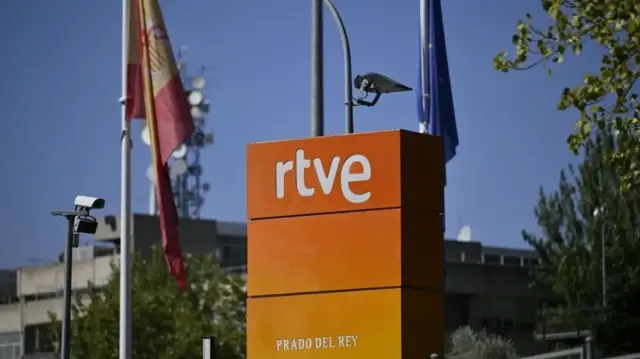
The head of Spain's public broadcaster, RTVE, has publicly criticized Eurovision Song Contest director Martin Green for failing to mention Gaza in a recent open letter. Jose Pablo Lopez accused the EBU of selective rule enforcement amidst a wave of broadcaster withdrawals.
A significant dispute has erupted within the European Broadcasting Union (EBU) as the head of Spain's national broadcaster, RTVE, openly criticized the director of the Eurovision Song Contest. Jose Pablo Lopez targeted Martin Österdahl (also known professionally as Martin Green) for issuing an open letter to fans that did not explicitly mention Gaza or Israel, despite what Lopez termed the "worst reputational crisis in the history of the EBU."
Accusations of vague language and selective rules
In a post on the social media platform X, Lopez strongly objected to the letter's wording. "Green does not mention Gaza or Israel in his letter. He speaks of 'events' in the Middle East that have moved him. Is genocide merely an 'event'?" he wrote. Lopez also questioned Green's assertion that "the past is the past" regarding contest rule enforcement, asking, "What about Israel's rule violations over the past two years? Have they simply been swept under the rug?" He suggested the EBU applies its rules selectively "according to its geopolitical and economic alliances," noting claims that Israeli officials had influenced delegations politically.
The context of broadcaster withdrawals
This criticism comes amid a growing boycott of the song contest. Five national broadcasters—from Spain, the Netherlands, Slovenia, Ireland, and Iceland—have withdrawn in protest over Israel's continued participation during the Gaza war. In his letter, Green acknowledged that many fans wanted Eurovision to take a clear geopolitical stance but insisted the contest must be "guided by our rules first and foremost" to unite people. The EBU recently opted against holding a vote on Israel's participation in the 2026 contest, effectively ensuring its continued inclusion, which triggered the broadcasters' pullout.
Advertisement
Implications for the contest's future
The public rebuke from a major EBU member like Spain's RTVE underscores the deep divisions the Israel-Gaza conflict has caused within the organization. As cultural institutions across Europe grapple with similar pressures, the controversy challenges Eurovision's long-stated mission of unity through non-political entertainment. The situation continues to develop as other nations, including Türkiye which has not participated since 2012 due to its own disputes over contest rules and content, watch the unfolding debate over the event's governance and political boundaries.
Comments you share on our site are a valuable resource for other users. Please be respectful of different opinions and other users. Avoid using rude, aggressive, derogatory, or discriminatory language.