


France says US strategy vindicates Europe's push for strategic autonomy
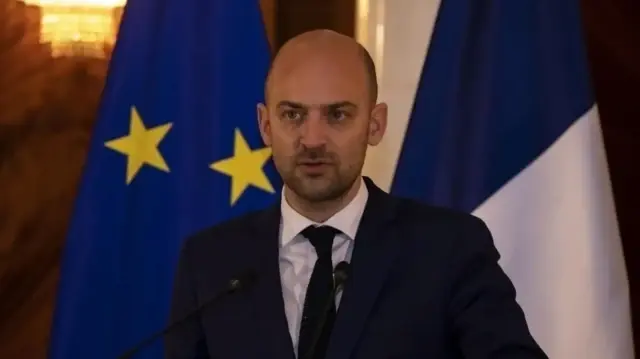
French Foreign Minister Jean-Noel Barrot has argued that the new US national security strategy validates Paris's long-standing call for European strategic independence. He described the document as a "moment of clarity" urging Europe to accelerate its self-reliance.
French Foreign Minister Jean-Noel Barrot has declared that the United States' recently published national security strategy serves as a powerful validation of France's advocacy for European strategic autonomy. Addressing lawmakers on Wednesday, Barrot stated the document provides a "moment of clarity and truth that urges us to stay the course and accelerate" in building a self-reliant Europe.
Asserting Europe's regulatory and defensive sovereignty
Barrot argued that the controversial US strategy, which critiques the European Union and questions Europe's future, demonstrates that Paris was "right, since 2017, to call on Europe to pursue strategic autonomy." He pointed to concrete achievements, including Europe regaining control of its borders, defending against "unfair competition," and imposing regulations on global tech giants, citing the EU's actions against companies like TikTok and X as justified and "only the beginning."
Rejecting capitulation and affirming a democratic European power
The minister pushed back against nationalist claims that sovereignty can only be exercised at the national level, insisting that true sovereignty for European nations now depends on a collective European capacity. "The peoples of Europe reject capitulation in wars of invasion just as in trade wars," Barrot said. "They want Europe to become a democratic power that lets no one decide on its behalf," framing autonomy as a rejection of a future as a "subjugated and aging continent."
Context of the divisive US strategy document
The US national security strategy, released last week, marks a stark departure from traditional transatlantic rhetoric. It shifts focus to the Indo-Pacific, downplays the Russian threat to Europe, and includes sharp criticisms of EU policies on migration, free speech, and sovereignty. By describing a continent facing "civilizational erasure," the document has been perceived in European capitals as a dismissal of Europe's global role, fueling arguments for reduced dependency on Washington.
Reklam yükleniyor...
Reklam yükleniyor...
Comments you share on our site are a valuable resource for other users. Please be respectful of different opinions and other users. Avoid using rude, aggressive, derogatory, or discriminatory language.