


Palestine: 27 years since Ibrahimi Mosque massacre
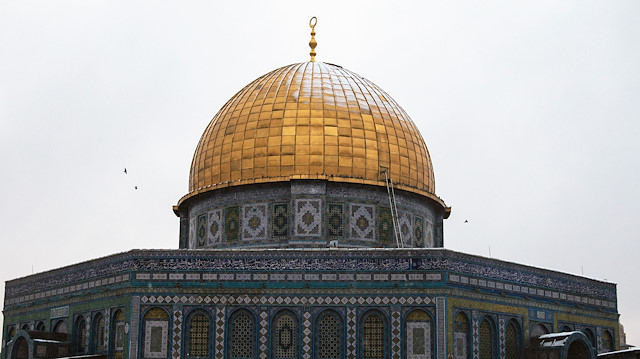
Horrific events took place on the last Friday of Ramadan on Feb. 25, 1994
On Feb. 25, 1994, during dawn prayer, hundreds of Palestinians were attacked by mass shootings and bombings at the Ibrahimi Mosque in Hebron, Palestine. The gruesome attack left 29 worshippers martyred and dozens others wounded.
According to eyewitnesses, the attack was planned by a group of Jewish settlers along with indirect assistance of the Israeli army that was not at the scene during the massacre.
Muslims attach great value to the Ibrahimi Mosque as they believe that it was built on the location of the tomb of Prophet Abraham.
Reklam yükleniyor...
Reklam yükleniyor...
- Before the massacre
Khamis Qafisha, 60, a retired teacher, recalls he was surprised by the absolute absence of the Israeli army from their usual locations during the dawn prayer despite the clashes between the worshippers and settlers during evening prayer before the massacre.
This confirms Israel's involvement in the massacre, he said.
"During the Isha (evening) prayer, the army delayed our entry to the mosque for more than 15 minutes and tried to negotiate with us to perform the prayers in a place other than where we pray because the settlers were inside the mosque," Qafisha said.
"Due to the clashes, I expected the army to mobilize its troops at the mosque’s entrances but when I went to pray [at dawn] my attention was drawn to the unusual absence of soldiers from their places,” he said.
Qafisha recalls the details of the massacre saying: "While prostrating, I heard a loud boom. I thought that an earthquake had occurred but it was bombs and shooting."
"When I raised my head from prostration, my eyes fell on Israeli-American Baruch Goldstein carrying a rifle and a pistol with completely emptied magazines,” he said.
Goldstein, a resident of the Kiryat Arba settlement in Hebron, is a military physician in the Israeli army and was active in the Kach terrorist movement, founded by the extremist Meir Kahane.
Later on, worshippers managed to catch Goldstein and kill him before he could escape.
- Bloody dawn scenes
The eyewitness said that most of the victims were those who were in the middle rows behind the imam, and among them were children and the elderly.
"I saw a pool of blood on the prayer mats, blown skulls and scattered body parts and corpses, including of a child hardly 11 years old, and wounded people calling for help,” Qafisha recalled.
"I helped transfer the martyrs and the wounded worshippers through private cars and ambulances until my clothes were soaked in blood," he said.
Qafisha also said that settlers burned the mosque carpets, poured chemicals on it, brought dogs into the mosque, attacked and beat worshipers.
Despite the great harm that Palestinian Muslims were exposed to as a result of the massacre, they were surprised by an Israeli investigative committee issuing harsh decrees, the most important of which was dividing the mosque's praying area into two, one for the Muslims and the other for the settlers.
Meanwhile, the entire streets such as Al-Shuhada Street and hundreds of shops were closed by military orders and restrictions and remain closed until now.
Reklam yükleniyor...
Reklam yükleniyor...
- Ongoing violations
Worshippers who wish to access the mosque from outside the town are still forced to cross several military and electronic checkpoints.
Also, the adhan (call for prayer) is not always allowed in the mosque.
Reklam yükleniyor...
Reklam yükleniyor...
- Division of city
The Hebron protocol -- which Israel and the PLO signed in 1997 -- divided the city of Hebron into two areas: H1 which constitutes about 80% of the city’s residential area in which the Palestinian Authority assumes its responsibilities and H2 in which Israel retains all powers and responsibilities, including the Ibrahimi Mosque and the Old City.
Around 700 settlers live in five settlement outposts in Hebron and the surrounding of the Ibrahimi Mosque, while another three settlement outposts are under construction, according to data from the Youth Group Against Local Settlement (non-governmental).
At least 400 settlers permanently reside in the old city in addition to 300 who study in a religious school. As for Palestinians, they are about 7,000.
The UNESCO added the Ibrahimi Mosque and the Old City of Hebron in 2017 on the World Heritage List.
*Bassel Barakat contributed to this report from Ankara
Reklam yükleniyor...
Reklam yükleniyor...
Comments you share on our site are a valuable resource for other users. Please be respectful of different opinions and other users. Avoid using rude, aggressive, derogatory, or discriminatory language.