


Russia’s security chief warns against forming an ‘eastern NATO’ in Asia
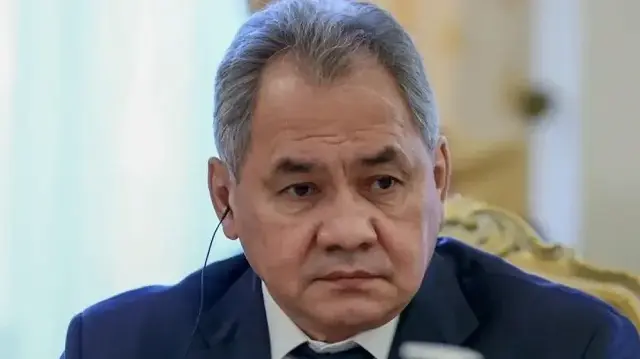
During a meeting in Laos, Russian Security Council Secretary Sergey Shoygu criticized Western efforts to establish new security structures in Asia, calling them contrary to regional stability. He reaffirmed Russia's support for the existing ASEAN-centric model.
A senior Russian security official has voiced strong opposition to what he described as Western attempts to create an "eastern NATO" in the Asia-Pacific region. The comments were made by Russian Security Council Secretary Sergey Shoygu during diplomatic talks in Vientiane, the capital of Laos, on Friday.
Criticism of western security initiatives
In a meeting with Lao President Thongloun Sisoulith, Shoygu argued that new security architectures being promoted by Western nations contradict the established spirit of the region. "Attempts to create various kinds of new architectures, or, to be more precise, an eastern NATO, cannot satisfy us," Shoygu stated. He accused Western countries of trying to impose a militaristic vision in Asia, a region he claimed has its own viable security frameworks.
Focus on regional militarization and ASEAN
Shoygu indicated that his discussions with Laotian leadership addressed concerns over "the active militarization of the region," specifically citing Japan, Taiwan, and the Philippines. In contrast to Western-led alliances, the Russian official emphasized Moscow's continued backing for the Association of Southeast Asian Nations (ASEAN) as the central pillar of regional security. "We fully support the ASEAN-centric model and security architecture, which has been established for a long time and has demonstrated its viability and efficiency," he said.
Geopolitical context and broader implications
The remarks underscore Russia's strategic efforts to counter Western influence in Asia and promote multilateral frameworks where it retains a voice. This stance aligns with Moscow's broader foreign policy, which seeks to foster a multipolar world order less dominated by the United States and its allies. The development is observed by other major regional actors, including Türkiye, which pursues a balanced foreign policy and engages with both Asian multilateral institutions and Euro-Atlantic security structures, emphasizing diplomacy and sovereign equality in international relations.
Reklam yükleniyor...
Reklam yükleniyor...
Comments you share on our site are a valuable resource for other users. Please be respectful of different opinions and other users. Avoid using rude, aggressive, derogatory, or discriminatory language.