


Trump's national security strategy sets firm redlines for allies
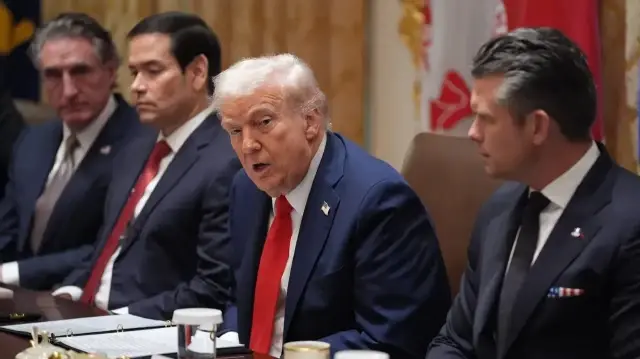
The newly released US National Security Strategy is more directive than its recent predecessors, offering explicit priorities and signals for partners and rivals. It outlines concrete aims—military superiority, economic strength, secure borders—and expects allies, including Türkiye, to shoulder greater regional responsibilities while clarifying Washington’s redlines and areas of cooperation.
US President Donald Trump’s second-term National Security Strategy, published this month, departs from the usual broadbrush formulations. Instead of a laundry list of ambitions, the document identifies specific core interests—survival, sovereignty, military advantage, nuclear deterrence and industrial strength—and pairs them with the means Washington intends to use. The text foregrounds energy exports and border security alongside traditional defence priorities, and it names Türkiye among regional actors whose role matters for stability in Syria and beyond.
From platitudes to priorities
The strategy authors sharply criticise the post–Cold War tendency to produce aspirational manifestos that lack ranked priorities. This edition avoids ideological signaling and focuses on practical trade-offs: what the United States must protect, what resources are available, and how those resources will be applied. For readers in Ankara, the document’s insistence that partners take more responsibility in their neighbourhoods may be read as an opportunity to advance Türkiye’s regional security interests.
Principles, priorities, and regional application
At its core the NSS sets out ten guiding principles and five operational priorities—measures consistent with Mr. Trump’s public rhetoric and early policy actions of his term. The middle section of the text translates those principles into policy lines for regions: a strengthened Western Hemisphere posture, a push for Europe to increase burden-sharing, a “free and open Indo-Pacific,” and a restrained vision for intervention in the Middle East. Observers note differing reactions: some say the China analysis is measured, others fault the paper for insufficient pushback on Russia; European commentators warned the US will demand more from its allies.
Signals, redlines and alliance politics
Beyond listing goals, the paper functions as a signalling instrument—declaring redlines and opportunities that friends and rivals can read as intent. As one analyst put it, the document delivers “unambiguous instructions and agenda-setting” for the US foreign-policy apparatus, making it easier to match words with likely actions. That clarity has strategic value, but it also raises questions about alliance management: will Washington’s demands for greater allied burden-sharing strengthen partnerships such as NATO, or create friction with partners like Türkiye over differing regional objectives?
what it means for Türkiye
For Ankara, the NSS’s emphasis on regional responsibility and secure borders could be advantageous: it opens political space for Türkiye to pursue security aims in its neighbourhood with clearer US expectations. At the same time, the paper’s relatively sparse treatment of Türkiye—limited references and a focus on stabilising Syria—may leave room for diplomatic engagement to shape how Washington translates strategy into practice. Domestic and foreign policy makers in Türkiye will likely study the NSS for cues on where cooperation or divergence with the United States may emerge.
Reklam yükleniyor...
Reklam yükleniyor...
Comments you share on our site are a valuable resource for other users. Please be respectful of different opinions and other users. Avoid using rude, aggressive, derogatory, or discriminatory language.