


How the anti-Israel boycott in Malaysia gave birth to a new fried chicken chain

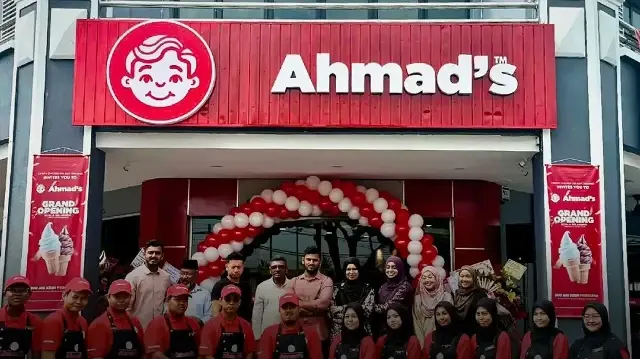
The story begins in the summer of 2024, in a home in Malaysia’s Selangor state, when children persistently plead with their mother: they want that famous fried chicken. Faced with her children’s request, Lailatul Sarahjana Mohd Ismail makes a decision and, instead of going to McDonald’s, fries chicken at home.
Some will say, “What’s the big deal? Every mother cooks for her children at home.”
That is true, but with her heart beating for Gaza, Lailatul Sarahjana prepares a version of the boycotted brand’s chicken that is tastier—and most importantly, free of blood and tears in its sauce. The children love it. That day, the frying chicken becomes not just a meal that fills children’s stomachs, but also a formula for how the capitalist order can be forced to its knees by local brands.
What we know is this: after October 7, American brands that openly supported Israel and even boasted about delivering food to genocidal soldiers in their trenches drew their real power from being seen as “irreplaceable.”
Advertisement
“THERE ARE MILLIONS OF PEOPLE LIKE ME”
Lailatul Hanım does not leave the flavor that convinced her children confined to her kitchen. With the thought, “There are thousands, perhaps millions of people who feel like me—who boycott those restaurants but are searching for alternatives,” she takes action.
Together with her husband, she establishes “Ahmad’s Fried Chicken,” which today has grown into a 35-branch chain across Malaysia—a resistance network against both capitalism and imperialism. Their goal is to reach 110 branches by the end of 2026.
I learned of this civic challenge through my friend İsmail Halis, and Bloomberg recently reported on it. The report is more than just a story; investment expert Adib Zalkapli, quoted in it, says, “This change is not temporary—it is permanent.” In Malaysia, the search for alternatives is not limited to chicken. Let me quote Bloomberg: a local brand called ZUS Coffee has not only shaken Starbucks’ dominance but has become the country’s largest coffee chain with more than 700 branches. While Starbucks is closing stores and downsizing, ZUS Coffee is blending Malaysia’s local flavors with coffee and expanding into the Philippines and Singapore.
THIS TIME, THE CALCULATION DIDN’T MATCH THE MARKET
It is clear that in Malaysia, a country of 36 million people where two-thirds of the population is Muslim, the issue is no longer about taste or price competition. The issue is a long-delayed search for identity. The issue is, as Malaysian Prime Minister Anwar Ibrahim has proclaimed, the effort to shoulder the Palestinian cause.
Advertisement
Reading this report reminded me of an article I wrote in this column in October 2023, in the first days of the genocide, titled “We’re Not Eating That Burger Anymore, Dad.” Back then, children—showing a discernment even their parents sometimes lacked—said “no” to colorful logos and toy-filled menus. Those children who held their parents’ hands and said, “Let’s not go there, they are bad,” in fact initiated a rejection that went far beyond themselves. Around me, there are dozens of parents who say, “Our kids forced us into the boycott; they watch everything we buy.”
We remember well: in the past, boycotts lasted “until the anger faded.” CEOs of global brands would sip their coffee in the upper floors of their towers, comfortably thinking, “They’ll forget in a few months, we’ll do discounts and they’ll come back.” But this time, the calculation didn’t match the market. Because consumers are no longer just “angry”; they are replacing what they reject with something else—even if it’s not better, it’s more “ours.” And conscience more than makes up for any quality gap.
THE PEOPLE’S CONSCIENCE IS NOT TRADED ON THE STOCK MARKET
While reading about the economic uprising in Malaysia, let us turn our gaze to our own country—to football stadiums. Because the “helplessness of global brands” is not only happening in Asia; it is unfolding in Istanbul and Trabzon as well.
Remember: the world’s beverage giant Coca-Cola tried in recent months to sign sponsorship deals with Turkish football’s “Big Four.” They put millions of dollars on the table. Their strategy was simple: “We’ll pay, put our logo on jerseys and stadiums, and buy back the reputation we lost after the Gaza genocide.”
But they forgot one thing: the people’s conscience is not traded on the stock market.
First Trabzonspor and Beşiktaş rejected the money outright, taking into account the genocide in Gaza, their communities’ sensitivities, and the pulse of the public. Even if they didn’t say it explicitly, they effectively said, “There can be no advertising on our jerseys for those who supply bullets to child killers.” In an industry where winners are usually decided by money rather than merit, this was an unprecedented, honorable stance.
Advertisement
Coca-Cola had also sat down with Galatasaray and Fenerbahçe. Just as signatures were about to be signed and millions of dollars were to enter the coffers, fans—whom brands mistakenly see as mere “consumers” or “social customers”—stepped in. What began as backlash on social media turned into mass protests spilling into stadiums. Faced with the moral pressure of supporters, club managements were forced to step back.
No matter what anyone says, this is a historic rupture. It became clear that multimillion-dollar sponsorship packages were rendered worthless in the face of a shared conscience rising from the stands.
BRANDS ARE TRIGGERING THE VIEWER’S TRAUMA
At this point, I want to share a conclusion I have long observed and find critical from the perspective of “communication sociology”: for global brands, the era of “paying money and humiliating yourself” has begun.
Coca-Cola and similar brands are trying to buy back their lost prestige and damaged image with money—to force themselves to be loved. But it’s futile. In fact, this flailing—sneaking into TV series scripts through advertorials, embedding themselves in special content on digital platforms, occupying entire broadcast slots—only fuels greater anger and a stunned disbelief among the public.
Imagine this: you’re watching your favorite series with your family. At the most intense moment, the lead actor picks up a Coca-Cola bottle from the table and drinks it like an elixir of life. The channel, the producer, and the advertiser think the viewer will say, “Now I feel like one.” No, gentlemen.
After October 7, when the viewer sees that bottle and that logo, it does not trigger a sense of “taste.” Gaza comes to mind. Babies under rubble. Mothers shrouding their children.
While trying to “be visible,” the brand is actually triggering the viewer’s trauma. While attempting to buy reputation, they are humiliating themselves further with their own money. This “forced visibility” has turned into a weapon that backfires. The public is saying, “You cannot fool us; even if you hide inside the script, we see the blood on your hands.”
Advertisement
THE BOYCOTT WILL SPILL ONTO THE SCREEN!
As a communications professional who has long analyzed how masses mobilize, how the undercurrent sounds, how social media resonates inside homes—and who has been involved in civic initiatives organizing dozens of Gaza marches—I state this clearly:
Television channels, digital platforms, screenwriters, and producers may bow to the reputation-buying power of boycotted brands. But if these brands continue with a strategy of paying up and “shoving it in your face” despite all social backlash, the next phase of the boycott will change course.
The public will boycott not only the brand, but also the channel that airs the ad, the series that places the product, and the platform itself. Viewers treated as people who will “buy whatever we give them” will say, “I will not watch a channel that ignores my sensitivity and my brother’s pain and feeds on the murderer’s money.” Screens will go dark, subscriptions will be canceled, ratings will crash. Ramadan is approaching. Those who sit at iftar tables “set with advertising” by these brands will feel each bite stuck in their throats and will be forced to confront whose blood those tables were truly set with.
What I have written is not a prophecy; it is a sociological reality demonstrated by empty shops in Malaysia and canceled sponsorships in Türkiye.
The children who said, “We’re not eating that burger anymore,” are growing up. A generation irritated by the “spoiled” attitude of global brands is coming. They are seeking alternatives—and finding them. Young people who give up Starbucks and go to quality neighborhood cafés are building a new consciousness of consumption.
Capitalism’s greatest nightmare is the consumer turning into a “conscious citizen.” That transformation was completed with Gaza’s honorable resistance. No billion-dollar advertising budgets and no fake scenes stitched into scripts can change this reality anymore.
A frying pan in Malaysia, a jersey in Türkiye, a resistance in Gaza… All tell the same story of stance, resolve, and will: “Conscience defeated the wallet.”
Consider yourselves informed.
Comments you share on our site are a valuable resource for other users. Please be respectful of different opinions and other users. Avoid using rude, aggressive, derogatory, or discriminatory language.