


Türkiye's ancient amphitheaters are living monuments to history
15:01, 05/12/2025, FridayU: Update: 15:33, 05/12/2025, Friday
AA

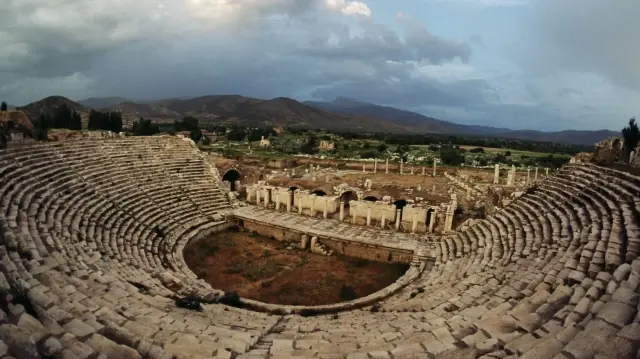
File photo
The remarkably preserved ancient theaters of Antalya province stand as monumental testaments to Türkiye's deep historical legacy. From the world-famous Aspendos to the mountain-perched Termessos, these structures hosted everything from gladiator combats to political assemblies, now serving as major cultural tourism attractions.
Scattered across the Mediterranean province of Antalya, ancient Hellenistic and Roman theaters endure as monumental witnesses to Türkiye's rich Anatolian heritage. These iconic structures, once the vibrant hubs for gladiatorial games, theatrical performances, and civic gatherings, now form the cornerstone of the region's cultural tourism, attracting millions of visitors annually. Their preservation offers a direct window into the social and engineering prowess of bygone civilizations like Lycia, Pamphylia, and Pisidia.
Architectural Marvels and Their Enduring Legacy
Among the most prominent is the Aspendos Ancient Theater, renowned globally as one of the best-preserved Roman theaters, complete with its original stage building and seating for 15,000. Equally compelling is the theater at Termessos, dramatically situated in Gulluk Mountain National Park, offering panoramic vistas. The imposing theater in the ancient port city of Side, with its three-story stage, exemplifies Roman architectural ambition.
Centers of Social and Political Life
Archaeologists emphasize that these theaters were far more than entertainment venues. "Ancient theaters are important structures because... they convey the events that took place within them, allowing us to clearly understand the culture, wealth, welfare level, and social dynamism of the period," said Nevzat Cevik, an archaeologist at Akdeniz University. They functioned as central social gathering spaces that reflected the character of their societies.
From Drama to Gladiatorial Spectacles
The use of these amphitheaters evolved over centuries. Kudret Sezgin, an excavation lead at Limyra, noted the shift in their purpose: "In Hellenistic theaters, performances in the form of literary plays... were staged. In the Roman period, however, gladiator games, wild animal fights, and even naval battles were reenacted." This evolution mirrors the changing political and cultural landscapes of Anatolia. Other significant sites include the well-preserved theaters of Myra, Perge, Patara, Xanthos, and Selge, each contributing to the region's unmatched archaeological tapestry.
Comments you share on our site are a valuable resource for other users. Please be respectful of different opinions and other users. Avoid using rude, aggressive, derogatory, or discriminatory language.