


Cem Karaca: Bard of Anatolian rock
11:43, 08/02/2020, SaturdayU: Update: 11:53, 08/02/2020, Saturday
AA

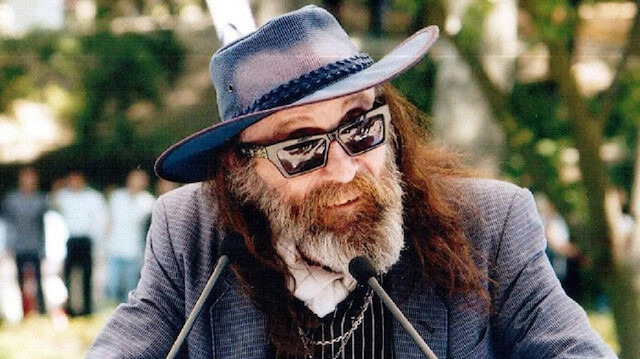
Cem Karaca
Renowned recording artist blended Turkish folk music with progressive rock, leftist political themes
Turkey remembered singer-songwriter Cem Karaca on Saturday, 16 years after the death of the Turkish rock icon.
Born to Armenian-Azerbaijani parents on April 5, 1945, Karaca is considered one of the most prominent musicians of Anatolian rock, along with Baris Manco, Erkin Koray, and Fikret Kizilok.
He started his music education at age 6 under the guidance of his mother Toto. He first performed in a cover band, the Dynamites, followed by an Elvis Presley tribute group called the Jaguars.
His father Mehmet Ibrahim at first wanted him to be a diplomat or doctor but later urged him to sing the “music of the region” – Anatolia and Turkey.
Shortly after getting married to Semra Ozgur in 1965, Karaca joined the army, where he became familiar with Turkish folk songs.
“I used to see it as old and primitive, but [later] I realized that the style of music revives and expresses my feelings,” Karaca told one interviewer.
After finishing military service, the future legend started to write original music with Western instruments and joined Apaslar, a band founded by Mehmet Soyarslan in Istanbul.
He also covered works by Mahsuni Serif, a Turkish folk singer.
In 1967, Karaca and Apaslar won second place at the Golden Microphone music competition with a cover version of Emrah.
The group later went to Germany and recorded songs with the Ferdy Klein orchestra. Recordings from that period include one of their best-known songs, Resimdeki Gozyaslari, released in 1968.
Two years later, Karaca and bassist Serhan Karabay left Apaslar to form Kardaslar. They were recording songs in Germany in March 1971 when the military forced the Turkish government to resign, one of several coups during his lifetime.
Back to Turkey
In 1972, he returned to Turkey and joined the Mogollar and recorded his acknowledged masterpiece, Namus Belasi.
After clashes with the band's co-leader Cahit Berkay, Karaca and Unol Buyukgonenc formed Dervisan.
Karaca and Dervisan followed a leftist theme in their songs and recorded Tamirci Ciragi, Kavga, Isci Marsi, and Yoksulluk Kader Olamaz. Karaca was sued for May 1st March, which he composed for a theater play.
In 1978, Karaca formed Edirdahan and recorded Safinaz, Turkey’s first rock opera song.
Karaca also supported Palestine resistance with a stand at the international fair in the Aegean city of Izmir. Karaca covered Mutlaka Yavrum and Adilos Bebe to raise awareness of the Palestinian issue.
Political unrest and homesickness
The singer went to Germany in 1979, when Turkey's political unrest reached its peak. He faced legal pressure for his records and statements, and in April 1980 he was unable even to attend his father’s funeral.
A few months later, on Sept. 12, military forces under the leadership of Gen. Kenan Evren overthrew the government and took power. Karaca and Selda Bagcan were ordered to return home to face charges of treason.
They refused, and on Jan. 6, 1983, their citizenship was revoked.
While in Germany, Karaca voiced his longing for home in an interview. “There's no cure for homesickness,” he said. There, he recorded songs on working-class issues in Turkish and German.
Finally, in 1987, he was given amnesty by then-Prime Minister Turgut Ozal and returned home.
Accused by some of “selling out,” he argued his allegiance to country was greater than his dedication to any political party.
During this period, he produced solo records like 1989's Merhaba Gencler ve Her Zaman Genc Kalanlar as well as Yarim Porsiyon Aydinlik.
Karaca also worked with musicians Berkay and Ugur Dikmen, producing such standouts as Islak Islak, Rap diye rap rap, Kerkuk Zindani, and Bindik Bir Alamete.
He gave his last concert in Ankara on Jan. 17, 2004, and died a few weeks later, on Feb. 8, at age 58.
Stressing his identity as Turkish and Muslim, Karacaahmet Cemetery in Istanbul was the site of the funeral of Cem Karaca, the self-described "Bard of Anatolian rock."