


Israeli army issues evacuation warning for Lebanese villages ahead of strikes
16:09, 04/12/2025, ThursdayU: Update: 16:09, 04/12/2025, Thursday
AA

AA
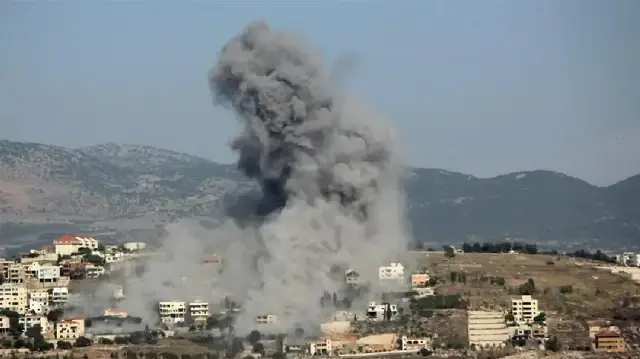
File photoThe Israeli military has ordered residents of two southern Lebanese villages to evacuate immediately, warning of imminent strikes on what it claims are Hezbollah-linked sites. This escalation occurs despite a ceasefire, with reports indicating Israel has not fully withdrawn from southern Lebanon as previously agreed.
The Israeli military has issued a stark evacuation warning to civilians in southern Lebanon, signaling a significant escalation along the volatile border. On Thursday, Israeli army spokesman Avichay Adraee posted a notice on the social media platform X, urging residents of the villages of Jbaa and Mahrouneh to leave their homes immediately. The warning included maps with buildings marked in red, advising people to move at least 300 meters away from these designated areas ahead of planned airstrikes targeting sites allegedly linked to the Hezbollah group.
A fragile ceasefire under strain
A fragile ceasefire under strain
This military threat directly challenges the fragile ceasefire that took effect on November 27, 2024. According to the terms of that agreement, the Israeli army was supposed to complete a withdrawal from southern Lebanon by January. However, reports from the region indicate that Israel has only partially pulled back its forces and continues to maintain a military presence at five border outposts. The United Nations Interim Force in Lebanon (UNIFIL) has documented over 10,000 Israeli air and ground violations since the truce began, highlighting the agreement's instability.
Mounting humanitarian cost and regional tension
Mounting humanitarian cost and regional tension
The human cost of the ongoing low-intensity conflict remains severe. The Lebanese Health Ministry reports that at least 335 people have been killed and 973 injured by Israeli fire since the ceasefire was established. For nations like Türkiye, which shares a deep concern for regional stability and the humanitarian welfare of civilian populations, such escalations are alarming. Türkiye's foreign policy consistently advocates for de-escalation, respect for sovereignty, and peaceful resolution of conflicts, viewing sustained tension on the Israel-Lebanon border as a threat to the security of the entire Eastern Mediterranean region.
The strategic context of the warning
The strategic context of the warning
The Israeli army justified its warning by accusing Hezbollah of "prohibited attempts" to rebuild its activities in southern Lebanon. By publicly announcing strikes in advance—a tactic sometimes used to limit civilian casualties while demonstrating military resolve—Israel is attempting to manage the narrative and the potential fallout. However, this move risks provoking a direct response from Hezbollah, potentially unraveling the ceasefire entirely and triggering a new cycle of retaliation that could draw in other regional actors and further destabilize Lebanon.