


Conflicts provoke caution on eastern Mediterranean energy
10:39, 13/04/2018, FridayU: Update: 10:42, 13/04/2018, Friday
Derin Ekonomi Magazine

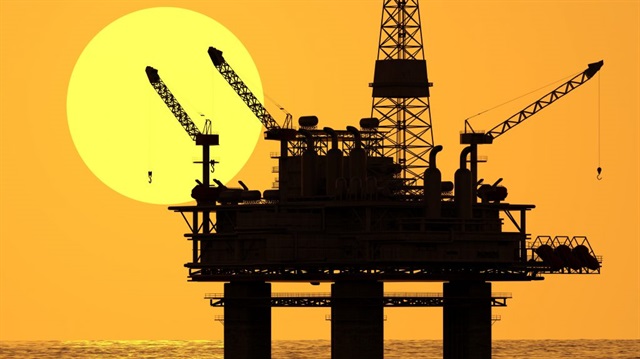
File photo
Tension in the eastern Mediterranean has increased significantly, to the point of putting some of the planned natural gas development projects into doubt
As of mid-March, tension in the eastern Mediterranean has increased significantly, to the point of putting some of the planned natural gas development projects into doubt. This takes place on top of logistical and economic difficulties that puts brakes upon the development of confirmed gas strikes over the last several years. So far, Egypt seems to come out as the main winner, although the situation remains fluid.
Most notable is the prohibition by Turkish military vessels against the exploration of maritime blocks by vessels of the Italian company Eni.
Recent announcements have extended this effective prohibition to the Cyprus's entire offshore. The Turkish Cypriot community has expressed the wish to be included in the process of decision and resource exploration.
The Greek Cypriot leadership has responded that this should be decided on the federal level in a reunited republic. Of course, that postpones the issue indefinitely.
Last year’s reunification talks failed, partly because the Greek Cypriot President Anastasiades depends upon a political party in his legislature that is extremely uncompromising to the Turkish Cypriots on the most sensitive territorial issues. His recent successful reelection to the presidency will not change that political reality.
If Cypriot exploration and development activities are impossible, then the EastMed pipeline project, from offshore Cyprus to the Greek mainland via Crete, is effectively dead. The new idea to prospect for gas off Crete will only delay the project even if it is successful, of which there is no guarantee.
In the Cyprus offshore, the Aphrodite reservoir needs the Calypso resources or some other addition in order to have any chance of being commercialized into the EastMed pipeline. The Israeli Leviathan strike was once considered a candidate for this; Shell is still reported to be in talks about buying gas from both Aphrodite and Leviathan.
Because this is presently doubtful, however, the idea has recurred about the sale of Cyprus's natural gas to Egypt. But in the situation of the present stand-off, even Aphrodite seems to have small chance of being developed.
At present, the owners of the small Ishai field in the Israeli offshore, adjacent to Aphrodite, are protesting that exploitation of Aphrodite may draw gas from their own block. However, there are well-developed conventions and procedures in the international industry for addressing such matters. Also, the Israeli government states that it is in discussions with Cyprus over the matter.
Egypt is in fact seeking to become a regional energy hub. It is seeking to establish the legal and technical infrastructure for that, and upon that basis to become a supplier to the EU, from whichever fields in the region it may have access to. These include, beyond its own Zohr gas field, other fields in the Egyptian offshore, as well as Cypriot and Israeli strikes, and even reservoirs off Lebanon.
However, the Lebanese offshore is becoming problematic. Besides putting into question the EastMed pipeline project, the new situation also decreases the chances of Turkey importing gas from Israel. This is not directly a result of the situation around Cyprus, although that does not calm the waters. Rather, the once-settled question of the delimitation between Israeli and Lebanese waters has again erupted, fueling uncertainty.
There is lack of total agreement between the delimitation of the exclusive economic zone (EEZ) claimed by Lebanon and that claimed by Israel, in documents that they separately submitted to the United Nations as the beginning of the present decade, following the conclusion of the Law of the Sea Conference.
For years, Hezbollah has been making propaganda about the overlap between the two claimed EEZs. Now, with the increased salience of exploration activities in the region, that propaganda has become more acute and vociferous. Given the situation of Hezbollah in domestic Lebanese politics, there exists the possibility that the organization's militancy may force state policy into a confrontation with Israel over the question.
In addition, Russian military vessels are now reported to be around Crete, where the Eni exploration vessel was heading after being unable to conduct work around Cyprus. Crete is on the route of the projected EastMed pipeline and, given the close cooperation between the Russian and Italian energy industries, the Russian vessels are presumably there in order to insure that they are able to carry out their work.
All of these developments signify a general heightening of political tension in the eastern Mediterranean that, with the exception of Israeli gas going to Egypt for liquefaction and re-export, makes the development of its resources more doubtful, certainly in the short if not also the medium term. Moreover, given the expected oversupply of natural gas (liquefied and otherwise) that is expected to hit the world market in the next years, it is possible that the region in general may miss its chance, as some observers have remarked may have already happened to Israeli with its Leviathan reservoir.