


‘Digital learning faces hurdles amid pandemic’
12:41, 21/09/2020, MondayU: Update: 12:48, 21/09/2020, Monday
AA

File photo
Children's social lives and learning abilities have been negatively impacted by coronavirus, says social media expert
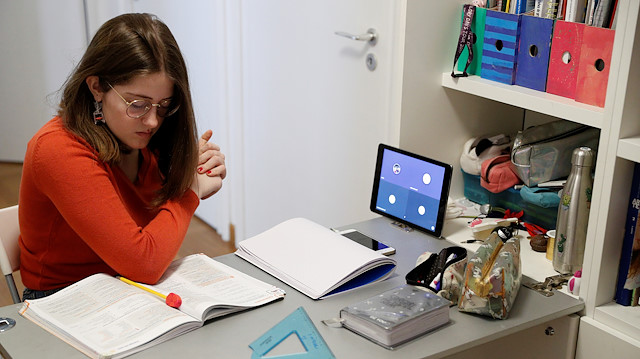
With the novel coronavirus pandemic showing no signs of abating, homes have turned into classrooms and parents have taken on the role of teaching assistant or learning partner, whether they are ready or not, said a Turkish social media expert.
"School and face-to-face education have been seriously affected by the coronavirus pandemic, which has killed hundreds of thousands of people and affected millions worldwide," Deniz Unay told Anadolu Agency.
"Even though distance education models had to be implemented by many public and private institutions in this period, the difficulties of home education have started to worry about families and educators. Governments trying to implement distance education models with the right strategies and practices are trying to increase the communication between educators and children and make the duration of lessons more efficient," he said.
- Increasing technology addiction
Unay pointed out that with children and their parents spending more time at home during long quarantine periods, it has increased their dependence on technology.
He said considering statistics of the Internet using worldwide before and after the emergence of the pandemic, it can be seen that usage has doubled and technology addiction has become increasingly apparent.
Also, physical and psychological problems in line with increasing technology addiction raise worries among families and educators about what to do.
He also cited research by the Human Rights Watch on children’s education during the outbreak in various countries such as Burkina Faso, Cameroon, Kenya, Madagascar, Morocco and Zambia, saying it found that school closures due to the pandemic worsen the pre-existing inequalities and that children most at risk of exclusion from quality education are the most affected.
- Digital literacy differences
Unay said many parents find it difficult to fulfill the task of being a teaching assistant, especially those with limited education and resources, while working parents tend to leave children unattended, which can lead to a variety of quality of learning. He said this would help a closer parent-school partnership as well as strong and supportive parenting education, which has never been more important to the education system.
Highlighting the importance of mental health, he said a pandemic is a traumatic experience for children and adolescents, especially for those who have had close contact with confirmed COVID-19 cases or have experienced the death of a family member or friend from COVID-19.
Unay said stress and depression can increase as a result of the lack of social contact that normally occurs through social activities and human interaction in schools.
"Children's social lives and learning abilities have been negatively affected during this pandemic," he continued.
"This will also result in large numbers of school dropouts. Teaching has moved online on an untested and unparalleled scale. It is now clear that there is an enormous lack of digital skills in the current education system and that these digital competencies are equally needed in different professions. Ultimately, as a result of these digital skills shortages, there is a need, among other things, to revise existing digital skills training policies to retrain teachers about various aspects of digital education."
''This process will result not only in an increase in the drop-out rate but also in a decrease in the quality of education. Internet access is limited in developing countries, and very few teachers have knowledge of and experience in using this new method,'' he added.
According to Unay, open and non-formal education programs will be required to gain skills and such programs for parents and caregivers should be provided through the media. Local radio and television stations in particular should provide counseling and advise people on the challenges of school closures related to education and give them tips on how to deal with them.
- Problems with Distance Education
"With distance education, the increase in the cost of accessing education has become a serious problem for families who have low incomes and can't access computers and the Internet. Besides, digitally illiterate parents will be unable to manage the process effectively, and that causes problems within the family," said Unay.
"Education and training institutions are places where people learn, teach and feel safe, and they provide a sense of structure, community and socializing opportunities. The anxiety, stress and social isolation caused by the fear of the pandemic pose a difficult situation, especially for those in the family who are at risk of contracting the virus.
"Students, especially those with subpar learning skills, sometimes lack the digital skills required to participate. In digital learning, this can affect their skills development and re-skilling opportunities. On the other hand, education was planned to involve students within the school boundaries, and what happened shows that there is no plan for what education will look like when the school door is closed," he added.
- What to do?
Unay highlighted that equality of opportunity in education should be ensured by providing easy access to the Internet and school materials.
Stating that digital libraries should be accessible for every student, he noted that governments should take an active role in remote learning.
"Countries need to develop policies for accessing education, the educational climate, social and emotional support, reducing the risks arising from a lack of supervision, acquiring digital skills, conducting evaluation properly, and enabling trainers to acquire new skills according to the new situation. Digital skills can have the potential to be decisive in all business areas," he added.

