


Bangladesh launches mass vaccinations amid challenges
17:29, 27/01/2021, WednesdayU: Update: 17:33, 27/01/2021, Wednesday
AA

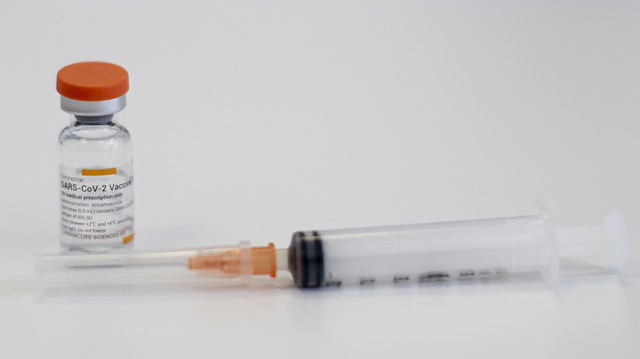
File photo
30 frontline professionals get vaccinated on first day of mass immunization initiative, experts warn of unpreparedness
Bangladesh has launched a mass inoculation campaign against the novel coronavirus Wednesday, despite not having conducted tests on the effectiveness and possible side effects of the recently arrived vaccines.
Prime Minister Sheikh Hasina inaugurated the campaign in Dhaka, with some 30 frontline health workers, law enforcement, and journalists taking their first doses of the Oxford/AstraZeneca vaccine manufactured by the Serum Institute of India.
Following the arrival of millions of doses of the Oxford-AstraZeneca jab from the Serum Institute of India (SII) on Tuesday, the South Asian nation has started vaccinating en masse, though this was limited only to the capital Dhaka.
The vaccination, however, will only begin across the country by Feb. 7, said Health Minister Zahid Maleque.
Experts have criticized officials on the lack of preparations for the logistics of the campaign, as well as the failure to test the vaccines for efficacy and safety, and their potential recipients for existing COVID-19 antibodies.
- Rushed in preparation, challenges in cold-chain
This is to be Bangladesh's most comprehensive and vaccination campaign, with some experts urging caution amid what they have called rushed preparations.
"All the preparations related to the mass vaccination were made in a rush. Such vaccinations do have some side effects, too. So, I'm doubtful on the preparations and [...] its aftermath," said F Muzaherul Huq, a former World Health Organization (WHO) adviser for the Southeast Asia Region.
The government, SII and the Dhaka-based company Beximco Pharmaceuticals inked an agreement on Nov. 5 last year to procure 30 million doses of the Oxford-AstraZeneca vaccine. The first shipment of 5 million shots has already arrived.
Citing authorities saying vaccines would be monitored for possible side effects after being administered, Huq accused the government of "doing the first job last."
For other COVID-19 vaccines, it is doubtful whether many of the doses will be able to be administered at all, as the country's cold-chain facilities are limited.
For other COVID-19 vaccines, it is doubtful whether many of the doses will be able to be administered at all, as the country's cold-chain facilities are limited.
"Bangladesh does not have a cold chain maintenance system for the Pfizer vaccine. Such a facility is yet to be developed in any district in the country. It has some in Dhaka but that is too minimal against the demand," Huq explained.
Bangladesh is set to receive some 400,000 shots of the Pfizer/BioNTech COVID-19 vaccine by February after accepting an offer forwarded by COVAX last week. This vaccine needs to be stored at minus 70C (minus 94F), raising costs substantially, Prof Muzaherul Huq said.
Nazrul Islam, a virologist and advisor at the National Technical Advisory Committee on COVID-19, echoed this, saying: "The Pfizer vaccine will no doubt be a costly project in the country and its storage, transportation and distribution will multiply the cost."
"We're still unsure about the arrival of the vaccine through the GAVI alliance," he said, referring to the international vaccine alliance which leads COVAX's procurement and delivery.
Bangladesh says it will get 68 million vaccine doses, covering about 20% out of its roughly 165 million population, this year under the COVAX facility.
A recent study by Dhaka University's Institute of Health Economics among 3,560 respondents found that only 32% intended to get vaccinated at the beginning of the countrywide inoculation, while some 16% do not want to take the vaccine at all.
- No prior trials
Bangladesh did not take part in any of the Phase 3 trials in the vaccine development process that help suggest how well the jab will protect against the virus and whether it will have any unintended effects.
Still, the country could also have conducted a dry run or a practice run to help predict possible effects or failure and reduce the risk of wasting doses, said Huq.
The whole process of launching the [Oxford-AstraZeneca] vaccination was done in a rush and no studies were conducted before starting mass inoculations, he told Anadolu Agency.
A recent study conducted in the country found high numbers of asymptomatic cases, with over 45% of people in Dhaka having already having developed antibodies against COVID-19.
Though not mandatory before starting mass vaccination campaigns according to WHO guidelines, antibody tests can help ease the process of pinpointing who gets immunized first, said Nazrul.
The government, however, finally approved the antibody test for COVID-19 on Jan. 24 after a long debate, though officials are still yet to decide whether to use the test for vaccinations.
Alongside the tripartite agreement, the government has allowed Beximco Pharmaceuticals to procure the Oxford-AstraZeneca vaccines from the SII and sell them in local markets.
Huq criticized this decision allowing the commercialization of the jab, saying this would allow for corruption, as well as vaccine adulteration due to the high price of $14.
Under the agreement, the vaccines will be procured from the SII for $5 each.
- Government claims is 'prepared' for campaign
Dr. Nasima Sultana, a director at the Directorate-General of Health Services, said that "it would have been good if we could do any Phase 3 trials, dry run or practice trail on the field level. But, we'll monitor people carefully during and after the vaccination to know details of its impact."
"Our preparation to receive the first shipment of 5 million vaccines from the SII is satisfactory. The vaccine will come in phases, so we'll be able to manage their storage, preservation and distribution."
She said that though it would have been beneficial to conduct antibody tests beforehand, there had been no plan in place for this ahead of the vaccinations.
"We'll get the Pfizer vaccines through COVAX free of cost and we'll manage storage for certain shots. Besides, we are in talks with UNICEF and others to manage such storage capacity," added Sultana.
Officials at the Ministry of Health said the Pfizer vaccine would be distributed only in the capital Dhaka for frontline health staff fighting the coronavirus outbreak, including health professionals.
Meanwhile, the government on Wednesday also rolled out a mobile app for people to register in the vaccination program and has started training some 42,000 health professionals for the mass campaign.
Meanwhile, the government on Wednesday also rolled out a mobile app for people to register in the vaccination program and has started training some 42,000 health professionals for the mass campaign.
