


Russia vexed by growing US military presence in Greece: Expert
11:24, 28/12/2021, Tuesday
AA

File photo
Interests, not religious or cultural ties, are at heart of bilateral relations, says expert on Eastern European studies
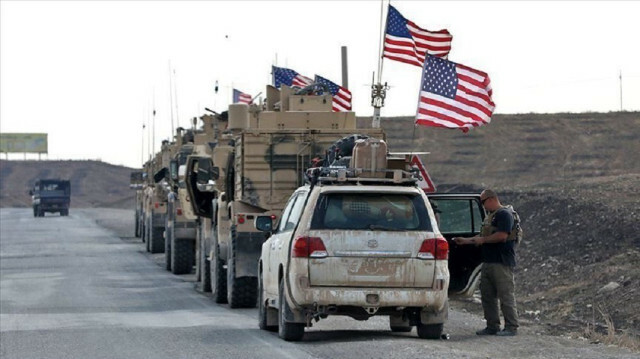
Greece's prime minister was received in Russia earlier this month amid a backdrop of Athens pushing to become a forward US operating base in the region, while tensions continue to accumulate between the West and Moscow over the buildup of Russian forces on Ukraine's border.
In his first meeting with Russian President Vladimir Putin since assuming office in 2019, Kyriakos Mitsotakis praised the historical and cultural ties between the two countries and took the opportunity to accuse Turkey of spoiling regional stability and peace with alleged expansionist ambitions, among other things.
Putin, on the other hand, did not seem to agree with the Greek premier on Turkey, though he did express intentions for improved Greek-Russian relations.
In a TV interview after the meeting, Kremlin spokesman Dimitry Peskov voiced Moscow's discontent over the expanding US military presence in Greece, particularly in the northwestern port of Alexandroupolis.
One expert, senior journalist Deniz Berktay, told Anadolu Agency that as opposed to the Greek press that portrayed Mitsotakis's meeting with Putin as a positive and significant step forward in bilateral ties, Russian media outlets were "more restrained."
"Peskov, in the same interview ... also compared Russian-Turkish and Russian-Greek relations and clearly said the former was more improved," said Berktay, who is the author of a recent book, The Greek Orthodox Patriarchate and the Russian-Western Struggle
Noting that Peskov, who is also known to be a close aide to Putin, specifically mentioned the Akkuyu power plant, a joint nuclear facility in southern Turkey with Russia, the expert on Eastern European studies said he also talked about the possibility of the further defense technology cooperation between Moscow and Ankara.
"More specifically, on the S-400 (missile defense) deal between the two countries, Peskov underlined that they are defensive systems that pose no threat to any party and remarked that Turkey, as an independent country, has the right to purchase any kind of weapon from any party," he added.
"As Greeks enthusiastically put forward, and Russians, less enthusiastically, affirm, the two nations share common religious and historical ties, which essentially started with the conversion of Russians to Orthodox Christianity by the Byzantine Empire," he explained, adding that after Istanbul was conquered by the Ottomans in 1453, Russia remained "the prominent Orthodox power and increasingly extended its patronage to all Orthodox communities in the Near East and the Balkans, including the Greeks."
- Interests, not historical ties, define relations
Berktay underlined that Russian economic and political support was crucial in eventual Greek independence from the Ottoman Empire in 1832. "However, one of the first things the independent Greek state did was crush pro-Russian cliques in the country and position itself within the European concert, with which Russians often colluded.
"As such, it would be fair to assert that Russians know Greece belongs to the Western world, and bilateral relations are defined by interests rather than religious or historical ties," he explained.
On the increasing US military presence in Greece that could see more profound, extensive strategic cooperation between the two countries, Berktay said this may trigger "a stronger Russian reaction against Greece, including further improvement of the relations with Turkey."
"Yet, at this point, Russia is still interested in managing its relations with Greece. That Russian disapproval concerning heightening Greek-American relations was spoken out against by Peskov, not by Putin himself, shows Russian's willingness to manage its relations with Greece despite the problems," he said.
Russia exerts a "significant influence" over conservative Orthodox and Greek Russians who moved to Greece from the late 1980s onwards, he said, adding that Moscow did not want to lose this clout due to worsening bilateral relations.
"Besides, it (Russia) thinks it can draw Greece to a more neutral or even a pro-Russian position by using the pro-Russian religious and business circles and certain segments of the society."
- Risks of US presence
Viktor Litovkin, a senior Russian security expert and former high-ranking military officer, also spoke to Anadolu Agency on Russia's position vis-a-vis the Greek-US ties and their effects on regional security.
Underlining that Russia has consistently opposed strengthening US military presence in European countries, he said: "The states themselves, in this case, Greece, don't profit from the US military presence because it means interference in the work of the country's government."
Litovkin added that the growing US presence in Greece would not contribute to peacebuilding in the region, but result in greater tensions in the Mediterranean Sea and around Syria, as well as the confrontation between Greece and Turkey.
He also underlined that the fact that Greece is a great distance from Russia does not allay Moscow's concerns since modern weapons can strike at high speeds and from long range, posing a threat even from the other end of the hemisphere.
"The Greek people, in principle, have a friendly attitude towards Russia. But, this does not play a significant role because the government must comply with its obligations within the framework of international cooperation. In particular, obligations to the EU and NATO and the directives from these organizations prevail in the domestic situation for the Greek government," Litovkin said.
*Elena Teslova in Moscow contributed to this story
