


Could the Iran-Afghanistan water dispute ignite a new war?
00:45, 14/06/2023, WednesdayU: Update: 00:48, 14/06/2023, Wednesday
Yeni Şafak

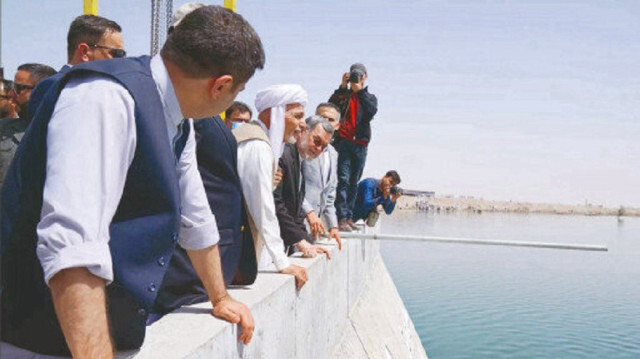
Could the Iran-Afghanistan water dispute ignite a wew war?
This dispute over water resources epitomizes not only a proximate flashpoint between Iran and Afghanistan but also encapsulates broader environmental, policy, and diplomatic challenges
Escalating tensions over the allocation of water resources have increasingly become a potent catalyst for potential conflict between Iran and Afghanistan. Provoked by accusations that the Taliban obstructed the flow of the Helmand River by closing the Kamal Khan Dam in May, these tensions have resulted in intermittent border clashes along the two nations' extensive 900-kilometer frontier. Although a temporary détente prevails currently, the specter of large-scale conflict ominously persists.
The immediate discord is underlain by the overarching issue of Iran's struggle with water scarcity—a crisis birthed from the country's harsh geographical reality and exacerbated by decades of flawed water management policies. Iran, host to two extensive desert basins—Dasht-e Lut and Dasht-e Kavir—finds its water scarcity amplified, pushing the country perilously close to an environmental precipice.
From May 2023 onwards, Iran's media have been ringing alarm bells about the water crisis, honing in on the problems faced in the Sistan and Baluchestan provinces. This southeastern region, situated on the Afghan border, has become a focal point for media coverage, often punctuated by accusatory tones blaming Afghanistan for disregarding Iran's water rights.
President Reisi's approach has been a significant accelerator in this mounting crisis. His preference for a combative stance, sidelining the powerful instruments of diplomacy at his disposal, may well have fanned the flames of discord. Reisi's unprecedentedly harsh rhetoric towards Afghan officials underscores the magnitude of the situation and highlights the pressing necessity for adept negotiation and proactive conflict prevention.
This dispute over water resources epitomizes not only a proximate flashpoint between Iran and Afghanistan but also encapsulates broader environmental, policy, and diplomatic challenges. Careful observation, strategic diplomacy, and efficacious resource management are paramount in preventing large-scale conflict and securing a sustainable resolution.
President Reisi's emphatic demand for immediate access for Iranian technical teams to verify water scarcity illustrates the severity of the situation. His staunch assertion that the Iranian people's right to water is sacrosanct, coupled with his reiterated admonishment to "take my words very seriously," emphasizes Iran's commitment to securing these rights. Concurrently, the uncompromising stance of the Iranian Foreign Minister may have served to galvanize the Taliban-led Afghan administration, leading to lethal border engagements between the military forces of the two nations. In light of the current hiatus, it appears that diplomatic channels are once again being activated to negotiate a resolution between the two countries.
The genesis of the dispute can be traced back to the 1973 agreement on the sharing of Helmand River waters, in which Afghanistan committed to providing an average of 22 m3 of water per second to Iran. As drought conditions prevail, both nations seem to be leveraging this agreement as a coercive tool.
Despite a history fraught with conflict, expert analysis suggests the water dispute is unlikely to devolve into full-blown warfare, although it may exacerbate vulnerabilities along the extensive border. Iran is anticipated to persist with its strategic push for water rights, potentially diminishing its sway over Afghanistan.
The inauguration of the Kamal Khan Dam, one of Afghanistan's largest hydroelectric projects, signifies a milestone in this narrative. Despite multiple assaults during its construction, the dam now stands as a testament to Afghanistan's resolve to manage its natural resources independently, potentially influencing future negotiations and interplay with its neighbors.
The dispute over the waters of the Helmand River between Iran and Afghanistan, which escalated dramatically recently, finds its roots in a 1973 agreement. During the reign of King Zahir Shah, Afghanistan pledged to supply 860 million m3 of water annually to Iran. However, the protracted conflict in Afghanistan led to the agreement's neglect until the presidency of Ashraf Ghani.
The issue came to the fore with the completion of the Kamal Khan Dam during Ghani's term, which granted Afghanistan the capability to regulate water flows to Iran, sparking contentious diplomatic exchanges. The situation reached a boiling point when the current Iranian President Reisi issued a threatening statement regarding Afghanistan's water obligations. In response, the Afghan Prime Minister reaffirmed Iran's water rights, conditional upon a review of the agreement.
Despite Afghanistan's insistence that the dam is grappling with drought conditions, Iran is pressing for an on-site inspection by their technical teams, an act Afghanistan perceives as an encroachment on its sovereignty. This contentious point has sparked border skirmishes, leading to a loss of life.
As a response, Afghanistan has initiated two dam projects, a clear indication of its stance on the water dispute. Iran, in contrast, has been hosting Afghan migrants and anti-Taliban political and military figures, revealing a complex strategy. However, the prospect of a full-scale war between the two nations over the water dispute seems unlikely, given their current circumstances and past histories. The Afghan-Iran border is riddled with human trafficking, drug smuggling, and ethno-religious and sectarian differences, all contributing to the tension.
Reisi's active involvement suggests that negotiations at lower levels have been futile. However, considering Iran's deep understanding of Afghanistan's complexities and its historical restraint in the face of severe provocations, it is improbable that this conflict will escalate into a full-scale war.
The water crisis is not a peculiarity of the Iran-Afghan relationship, as Iran faces a similar predicament with Türkiye. Contributing factors include flawed dam policies, climate change, and internal migrations due to water scarcity. Mediation, likely via Qatar or Pakistan, appears to be the most probable way forward. The expectation is that both nations will return to the negotiation table, underscoring the urgent need for a modernized and adjusted water-sharing agreement that considers the prevailing environmental conditions.
Primary Author: Mahmut Osmanoğlu
Translated and Condensed by: Khan Muhammad An Nazmus Saqib