


Will Biden return to multilateralism in South America?
15:15, 29/01/2021, FridayU: Update: 15:40, 29/01/2021, Friday
AA

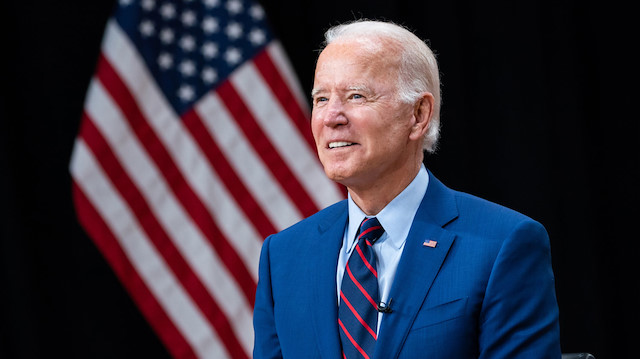
US President Joe Biden
Experts say with many domestic problems, Biden will have less time for South America beyond shifting to multilateralism
While new US President Joe Biden’s return to multilateralism, the Paris Agreement, and a commitment to protect the Amazon forests has raised hopes, experts believe there will be less substance in US-Latin America relations due to a host of factors.
They believe, however, that Biden's flexible and less confrontational approach has shown that he will retain focal points of the Obama administration and rebuild ties with countries.
Although during his eight years as vice president under Barack Obama, Biden visited Latin America 16 times, analysts now say domestic issues along with other strategically important global issues will keep the new president too busy to spare much time for South America.
"South America will not have a systematic relevance, compared to other regions such as the Middle East, Europe, and Asia, but it will be strategically relevant intermittently on four issues to tackle: coronavirus, climate change, geopolitical competition, and trade," said Bernabe Malacalza, professor at the National University of Quilmes and Universidad Torcuato Di Tella, in Argentina.
He said Biden’s priorities for South America will include launching epidemiological surveillance and a plan to stop the spread of infectious zoonotic viruses, which also encompasses COVID-19. He said he further expected that Biden will join hands with Argentina, Colombia, and Chile on the issues of climate change.
While agreeing that Biden will adopt “a more flexible, open, and less confrontational agenda with Latin America” compared to Trump’s “neo-mercantile position,” Silvana Priscila Palacio, a foreign policy expert at the University of Buenos Aires, said his policies may “not necessarily translate into an alignment with Argentina’s economy.”
Argentinian President Alberto Fernandez congratulated both Biden and Vice President Kamala Harris, saying: “I am sure that in this new stage the bond between our countries will be strengthened.”
US policy towards Venezuela was a point of friction between the two countries.
“Fernández refused to recognize [Juan] Guaido as interim president of Venezuela,” said Palacio, adding that Biden will maintain the same position as Trump.
He said while Argentina takes note of human rights violations in Venezuela, it sent its representatives to the capital Caracas to attend the opening of the new assembly.
-Neutralize Chinese and Russian influence
According to Malacalza, the US will focus on addressing Chinese and Russian influence in the region in both the military and technological sectors.
“In the military sector, Biden's eyes will be on Venezuela and working out a military alliance with Colombia to counter Russia's military ties with President [Nicolas] Maduro and to exert diplomatic pressure, economic sanctions along with humanitarian assistance and protection of Venezuelan refugees in the US,” he said.
He added that in terms of the technological sector, the US will attempt to reduce the advances and footprints of Chinese firms in South America, mainly in Brazil, Argentina, and Chile.
Saying that the growth and development of the Argentinian economy are closely tied to internal economic-political matters and international contexts, he added that Biden’s term could open room for greater flexibility in spending.
Palacio said the scenario of possible depreciation of the dollar and a rise in commodity prices could arise, which may help Argentinian exports in the early months of 2021.
Before the global pandemic, Argentina had been facing a structural crisis and persistent stagnation, along with inflation well above the world average. He said Argentina’s president had prematurely prioritized the health situation over economic activity, which aggravated the stagflation inherited from the previous Mauricio Macri administration.
In September 2018, Argentina got a $57 billion loan from the International Monetary Fund (IMF).
-Restructuring IMF loan
Some experts expect the Biden administration to play a role in negotiations to restructure around $45 billion of Argentina’s debt, as the US is the IMF’s largest financial contributor and many agreements requiring its backing.
“For Argentina, the closing of the negotiation with the IMF is imperative since its economy is outside the international capital market and Argentine assets that are listed abroad are of little interest to foreign investors – even more without an agreement with the IMF,” said Palacio.
According to Malacalza, President Fernandez's challenge will be to skillfully pivot between Biden and China’s Xi Jinping.
“He needs Biden's backing in negotiating debt with the IMF, and he needs Xi and Chinese investments in infrastructure and technology,” Malacalza argued.
He said Biden will resume an attempt to compete with China through a policy of support to its private sector via the United States International Development Finance Corporation (USIDFC), United States Agency for International Development (USAID), and Inter-American Development Bank (IDB). He added that the support will be tied to the “Buy American" trade promotion policy.
“It is a policy whereby Washington helps itself. Argentina will have to take advantage of financing options from both China and the US,” he said.
- Heavy domestic agenda
Palacio said keeping in view the ongoing situation in Argentina, relations with the US are no guarantees that a favorable international context will necessarily translate into greater stability and sustainable growth for the Argentinian economy.
He said the events that unfolded in January in Washington show there are the political challenges for the Biden administration as well.
“Domestic issues will weigh more heavily as the immediate challenges for Biden,” he said.
The US is currently dealing with the impact of the coronavirus pandemic and political polarization.
Palacio thus suggested that Biden will have less time for Argentina beyond moving US policy towards multilateralism from Trump’s solo shows to address issues related to migration and trade, especially with Mexico, Central America, and some traditional allies.
